“Perjurer — A Threat to Society”: No Bail, No Pardon, No Escape — To Shield a Perjurer Is to Invite Social Pollution: Supreme Court Mandates Compulsory Perjury Action and Trial in Custody
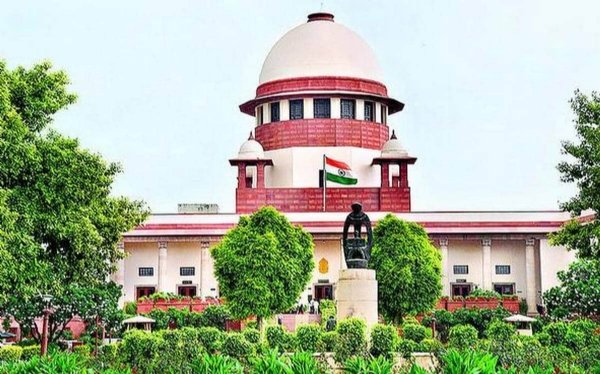
Fabrication of Court Evidence by Kejriwal and Sanjay Singh, Coupled with Cognizance of Contempt Taken Against Them by the High Court, Places Them Squarely Within the Supreme Court’s Stern, Categorical, and Unambiguous Warning That to Pursue an Offender Upon Commission of an Offence Is to Sub-Serve a Vital Social Need — for Society Cannot Afford to Have a Criminal Escape His Liability, Since Such Escape Would Inevitably Bring About a State of Social Pollution Which Is Neither Desired, Nor Warranted, Nor Can Any Civilised and Law-Governed Society Be Expected or Required to Endure [State v. Mangesh Chavan, 2020 SCC OnLine Bom 672; Manohar Lal v. Vinesh Anand, 2001 (5) SCC 407, ]
When Courts Are Misled, Justice Itself Becomes the Victim. – Supreme Court Declares Accused in Perjury Must Be Tried in Custody — Kejriwal, Sanjay Singh and Others Have No Entitlement to Bail in Perjury Proceedings; Apology Is No Defence, Compounding Is Impermissible, and the Court’s Duty to Act Is Absolute and Inescapable. [ Naveen Singh v. State of U.P. [(2021) 6 SCC 191], Sushil Ansal v. State [2022 SCC OnLine Del 482], Ranbir Singh v. State [(1990) 41 DLT 179], and Samson Arthur v. Quinn Logistic India Pvt. Ltd. [2015 SCC OnLine Hyd 403]
The offnces committed by Arvind Kejriwal and others includes sec 2(c),12 of the Contempt of Courts Act,1971 with sec 228, 229, 336, 340, 60, 61, 45 and 3(5) — etc of BNS each offence carrying imprisonment of up to 7 years, in addition to 6 months under criminal contempt. In such cases apology does not help the accused as the offences of perjury are not compoundable.
Advocate Nilesh Ojha, Chairman of the Indian Bar Association, stated that where any person has a genuine grievance against a Judge, the law provides adequate remedies, including approaching appropriate forums, seeking legal action, and even publishing material supported by credible evidence regarding alleged misconduct. However, he cautioned that creating forged evidence against honest judges, running false narratives, or attempting to weaken constitutional institutions and the judiciary through a “narrative-driven pressure mechanism” aimed at fostering anarchy, cannot and will not be allowed to succeed at any cost.
He further stated that efforts to intimidate judges, defame them, or influence judicial processes through fabricated material and misleading campaigns pose a serious threat not only to the independence of the judiciary but also to constitutional democracy itself.
“At such a time, we stand firmly with the judiciary and with honest judges who discharge their constitutional duties fearlessly, independently, and in accordance with the rule of law. Judicial accountability must always be based on evidence and lawful process — not intimidation, fabrication, or orchestrated public pressure,” he said.
The Supreme Court of India has issued a stern, unambiguous, and constitutionally significant warning to all those who dare to fabricate or forge evidence before courts of law: such persons are not merely criminal offenders in the ordinary sense — they are a clear and present danger to society itself, and allowing them to remain within society without prosecution and punishment will inevitably lead to social pollution of an irreversible and catastrophic kind. Society, the Court has declared, cannot afford such pollution. It is further ruled that it is obligation of the Courts and more particularly High Court to order prosecution of perjury when there is an attempt to save accused and court will be failing in its duty if prosecution is not ordered.
The ratio laid down in the aforesaid judgments has assumed renewed significance in light of the recent cognizance reportedly taken by the Hon’ble Division Bench of the Delhi High Court in criminal contempt proceedings and issuance of notices against Arvind Kejriwal and other Aam Aadmi Party leaders, including Sanjay Singh, Manish Sisodia, Durgesh Pathak, Ashwin Bhardwaj and Vinay Mishra, in relation to allegations concerning circulation and amplification of a manipulated AND fabricated video Intended to create a false narrative and undermine the impartiality and reputation of Hon’ble Dr. Justice Swarana Kanta Sharma.
The controversy has brought into sharp focus the settled judicial principles that deliberate fabrication, false evidence, or dissemination of misleading material touching pending judicial proceedings may transcend ordinary political criticism and, where established, potentially attract consequences under the law relating to contempt, perjury, obstruction of justice, and offences against public justice. The issue therefore extends beyond individual personalities and raises larger constitutional concerns regarding protection of judicial independence, purity of adjudicatory processes, and accountability for attempts to influence public perception concerning pending judicial proceedings.
In Manohar Lal v. Vinesh Anand, 2001 (5) SCC 407, it is ruled that;
“To pursue an offender in the event of commission of an offence, is to sub-serve a social need Society cannot afford to have a criminal escape his liability, since that would bring about a state of social pollution, which is neither desired nor warranted and this is irrespective of the concept of locus the doctrine of locus-standi is totally foreign to criminal jurisprudence. This observation of ours however obtains support from the decision of this Court in AR Antulay v. Ramdas Sriniwas Nayak & Anr. : 1984 (2) SCC 500.”
In State v. Mangesh Chavan, 2020 SCC OnLine Bom 672, it is ruled that all Courts, and more particularly High Courts, are not merely empowered but are duty bound to initiate perjury proceedings where a person deliberately gives false evidence or attempts to mislead the Court in order to help accused persons to save them from any legal action or obstruct justice. The Court observed that remaining silent despite clear evidence of perjury would amount to failure in performing judicial duty.
BACKGROUND — HOW IT ALL BEGAN
In the Delhi Excise Policy Liquor Scam case, accused Arvind Kejriwal and his senior party leaders, facing proceedings before Hon’ble Dr. Justice Swarana Kanta Sharma, moved an application demanding that the Judge recuse herself from hearing the matter. Their stated ground was extraordinary — they alleged that the Judge was ideologically aligned with the RSS and that, being on the opposite end of the ideological spectrum, they could not expect justice from her court.
The Court responded with a 115-page order — a thorough, point-by-point demolition of every argument placed before it. The recusal application was rejected in its entirety.
Unable to succeed in court, Kejriwal and his party then took the battle outside it — and into far more dangerous territory.
THE FABRICATION — MANUFACTURING BIAS BY TAMPERING VIDEO
To lend credibility to their rejected narrative of judicial bias, AAP leaders and their social media machinery turned to deliberate fabrication. They located a video of Hon’ble Dr. Justice Swarana Kanta Sharma delivering an academic lecture at the prestigious Mahatma Gandhi Kashi Vidyapeeth University, Varanasi, at a national workshop on newly enacted criminal laws held on 19th May 2024.
That video was then deliberately cropped, edited and tampered with — with words cynically inserted and context maliciously stripped away — to make it falsely appear as though the Judge herself had stated that whenever she attends RSS programmes, she receives promotions. It was a complete and utter fabrication — bearing no relation whatsoever to what the Judge had actually said in her academic address.
This doctored video was then unleashed across social media platforms by Kejriwal, Sanjay Singh and other AAP leaders — circulated widely, amplified aggressively and used as apparent proof of the very bias the Court had already conclusively rejected.
THE EXPOSURE — AND THE CONTEMPT THAT FOLLOWED
The fabrication did not survive scrutiny. Press Trust of India (PTI) — and Bar and Bench — and many more published fact-checks and conclusively exposed the doctored video as false, establishing clearly that the Judge had said no such thing and that the video had been manipulated.
Yet even after this public exposure — even after being confronted with undisputable proof that the video was fabricated — Kejriwal, Sanjay Singh and other AAP leaders continued to circulate, defend and weaponise the doctored video to defame and harass Hon’ble Dr. Justice Swarana Kanta Sharma and also to defame the entire institution.
This continuation of the campaign after the exposure of its falsity is what elevates this case from mere contempt to what the Delhi High Court has rightly characterised as one of the most heinous and aggravated forms of criminal contempt, forgery and perjury witnessed in recent judicial history — a deliberate, knowing and persistent assault on the dignity, integrity and independence of the judiciary itself.
THE WIDER CONSPIRACY — A COORDINATED ECOSYSTEM OF DEFAMATION
What has emerged from the Delhi High Court’s findings and material on record is not merely an isolated act of video tampering by a few political leaders — but a vast, coordinated and multi-layered conspiracy involving politicians, senior members of the Bar, legal media platforms and social media amplifiers, all working in concert to defame Hon’ble Dr. Justice Swarana Kanta Sharma and subvert the course of justice.
LIVE LAW — MEDIA AS AN INSTRUMENT OF CONSPIRACY
Among those found to have joined this conspiracy is Live Law — a widely read legal news platform — which allegedly became an active participant in the campaign to influence the very decision that was pending before Justice Swarana Kanta Sharma on the recusal application.
In a calculated and deliberately timed move — just few days before the pronouncement of the order rejecting the recusal application — Live Law published an interview of Mr. Justice Abhay Oka (Retd.), a former Supreme Court Judge, in which he was quoted as stating that he would not have attended programmes of Adhivakta Parishad, characterising it as an RSS entity.
The timing of this publication was not coincidental. It was a deliberate, pre-meditated attempt to create public and judicial pressure — to plant the narrative that attending RSS-affiliated programmes was itself evidence of ideological bias — at the precise moment when the Court was about to rule on the recusal application. It was, in its essence, an attempt to influence a pending judicial decision — one of the most serious offences known to the law of contempt.
KAPIL SIBAL’S ‘DIL SE’ —JOINS THE CONSPIRACY
The conspiracy did not end with the rejection of the recusal application. It intensified.
Senior Advocate and Rajya Sabha MP Kapil Sibal — himself named as a co-accused — used his personal YouTube channel Dil Se as a platform to further the campaign of defamation against Justice Swarana Kanta Sharma. In a carefully orchestrated move after the recusal order was passed, Sibal arranged and hosted interviews of fellow co-accused advocates, including:
· Adv. Meenakshi Arora — Senior Advocate
· Adv. Sanjay Hegde — Senior Advocate
· Adv. Vivek Tankha — Senior Advocate and former Rajya Sabha MP
Together, on a platform specifically designed to reach a wide public audience, these senior members of the Bar spread a false, twisted, distorted, one-sided and deeply misleading narrative — carefully constructed to defame Hon’ble Dr. Justice Swarana Kanta Sharma, paint her as biased and partial, and lend the false legitimacy of legal authority to Kejriwal’s discredited campaign.
THE ARCHITECTURE OF THE CONSPIRACY — PIECED TOGETHER
When viewed as a whole, what emerges is not a series of isolated, unconnected acts — but a chilling, deliberate and sophisticated architecture of conspiracy, meticulously executed in coordinated stages, with each participant playing a defined role in a premeditated campaign to defame a sitting judge, influence a pending judicial decision and delegitimise a constitutional court’s order.
STAGE 1 — THE POLITICAL TRIGGER
Arvind Kejriwal and AAP file a recusal application before Hon’ble Dr. Justice Swarana Kanta Sharma — alleging, without credible basis, that she harbours RSS sympathies and that they cannot expect a fair hearing. The Court responds with a comprehensive 115-page order, demolishing every argument and rejecting the application in its entirety.
Defeated in court, the conspiracy moves outside it.
STAGE 2 — THE FABRICATION
Unable to establish bias through legitimate means, AAP’s machinery turns to deliberate fabrication. An official video of the Judge’s academic lecture at Mahatma Gandhi Kashi Vidyapeeth University is cropped, doctored and tampered with — false words inserted, context destroyed — to manufacture the false impression that the Judge herself claimed RSS connections as a source of her promotions. The doctored video is then unleashed across social media platforms as apparent proof of the very bias the Court had already judicially rejected.
STAGE 3 — MEDIA AMPLIFICATION BEFORE THE ORDER
In a move of calculated and deliberate timing — just before the pronouncement of the recusal order — Live Law publishes an interview of Justice Abhay Oka (Retd.) in which he states he would not have attended programmes of Adhivakta Parishad, characterising it as an RSS entity. The message is unmistakable and the timing is no coincidence — it is a deliberate attempt to build public and judicial pressure and influence a decision that is pending before the Court. An attempt to prejudice a judicial proceeding — one of the gravest known forms of contempt.
STAGE 4 — THE ECHO SYSTEM ADVOCATES JOIN AFTER THE ORDER
Once the recusal order is passed, Senior Advocate and MP Kapil Sibal deploys his YouTube channel Dil Se as the next instrument of the campaign. In carefully arranged interviews, he hosts fellow co-accused senior advocates — Meenakshi Arora, Sanjay Hegde and Vivek Tankha — who, collectively and individually, spread a false, twisted, distorted, one-sided and deeply misleading narrative designed to defame Justice Swarana Kanta Sharma, lend false legal legitimacy to Kejriwal’s discredited campaign and delegitimise the Court’s order in the eyes of the public.
That these are senior officers of the court — individuals bound by solemn oath to uphold judicial dignity — makes their participation not merely a legal offence but a profound betrayal of the Bar’s most fundamental obligations.
STAGE 5 — CONTINUED AMPLIFICATION AFTER EXPOSURE
Even after Press Trust of India and Bar and Bench conduct independent fact-checks and conclusively expose the doctored video as a fabrication, Kejriwal, Sanjay Singh and their ecosystem of YouTubers and social media functionaries continue to circulate, defend and weaponise the false narrative. The exposure of their falsehood does not pause the campaign — it accelerates it. This wilful continuation after knowledge of falsity is what transforms this from contempt into its most heinous and aggravated form.
THIS IS NOT THE FIRST TIME — A PATTERN OF MODUS OPERANDI EXPOSED
Perhaps the most significant and far-reaching dimension of this case is what it reveals beyond itself.
This is not an isolated incident. This is not a one-off lapse of judgment. What the Delhi High Court’s findings have exposed is a deliberate, repeatable and well-practised modus operandi — a playbook that this very ecosystem of politicians, advocates, legal media and social media amplifiers has deployed repeatedly and systematically in case after case, whenever a judicial decision threatens the interests of its members.
The pattern is now nakedly visible:
- Allege bias against the presiding judge when the case is not going their way
- Manufacture and amplify a false narrative to support that allegation
- Deploy sympathetic legal media to build pressure at critical moments before decisions
- Mobilise echo system advocates to lend false credibility to the narrative after unfavourable orders
- Flood social media with doctored content and distorted commentary to delegitimise the Court
This modus operandi — now judicially identified, documented and placed on record — opens the door to a far wider reckoning. Many other cases in which this playbook was deployed are now likely to be revisited and reopened. The exposure of this ecosystem’s methods in one case casts a long and searching shadow over every other case in which similar tactics were employed.
THE VERDICT OF HISTORY
What the Delhi High Court has done in CRL.REV.P. 134/2026 is more than take cognizance of contempt in a single case. It has unmasked a system — a sophisticated, coordinated and self-serving ecosystem that has, for too long, operated in the shadows of the judiciary, manipulating narratives, pressuring courts and corrupting public discourse about judicial proceedings.
That ecosystem — its politicians, its advocates, its media platforms and its social media army — has now been brought into the light.
They built a system to influence courts through pressure, fabrication and false narrative. The Delhi High Court has now turned that system inside out — and what lies within it is now permanently on judicial record.
The modus operandi is exposed. The architects are named. And many more cases now await their reckoning.
THE GRAVITY OF WHAT HAS OCCURRED
What this case lays bare is a first-of-its-kind coordinated assault on the independence of the judiciary — involving politicians, senior advocates, retired judges and legal media — all deployed in a systematic campaign to defame, pressurise and delegitimise a sitting judge of a constitutional court.
That senior members of the Bar — officers of the court bound by solemn oath — chose to become instruments of this campaign is perhaps the most deeply troubling dimension of this entire episode. Their participation did not merely add credibility to a false narrative. It represented a fundamental betrayal of the Bar’s sacred duty to protect, not undermine, the dignity and independence of the judiciary.
This judgment is a watershed moment. It exposes with judicial precision the dishonesty, forgery and perjury that AAP and its leaders engaged in — not as political opposition, but as a calculated conspiracy to subvert judicial independence through manufactured narratives, tampered videos and coordinated social media campaigns. The fact that they continued their campaign even after independent agencies publicly debunked their claims only confirms the deliberate and malicious character of their conduct.
AAP and its leaders sought to achieve through intimidation what they could not achieve through law. The Delhi High Court has ensured that the rule of law does not kneel before such orchestrated public pressure.
The grossest kind of perjury, forgery and contempt has now been placed on judicial record — and additional action under Section 193 IPC, carrying punishment of 7 years imprisonment, is now squarely warranted.
An Open-and-Shut Case: When Fabricated Evidence Meets the Full Force of Law
This is, by every measure, an open-and-shut case. The evidence is entirely digital, undisputed, and — critically — aggravated in character, given that the contemnors chose not to withdraw the offending video even after it was publicly declared doctored and fabricated by independent fact-checkers. That deliberate act of persistence transforms this from a straightforward contempt matter into something far more serious. Courts have not been lenient in comparable situations. Even in less grave cases involving publications against judges on social media platforms and YouTube, the Delhi High Court has not hesitated to sentence contemnors to six months’ imprisonment for each publication. The Supreme Court has gone further, laying down unequivocally that in cases involving false and fabricated versions circulated against judges, no apology can be accepted and the notorious “slap-sorry-go” approach is simply not permissible under law. On the question of perjury, the court has been equally unsparing: judges who fail to act in the face of false and distorted versions, fabricated evidence, and deliberate suppression of material facts are themselves failing in their constitutional duty. The Supreme Court has made it abundantly clear — in Naveen Singh v. State of U.P. [(2021) 6 SCC 191], Sushil Ansal v. State [2022 SCC OnLine Del 482], Ranbir Singh v. State [(1990) 41 DLT 179], and Samson Arthur v. Quinn Logistic India Pvt. Ltd. [2015 SCC OnLine Hyd 403] — that accused persons in perjury matters must be tried in custody, without the relief of bail. Perjury is a non-compoundable offence, and no court carries the jurisdiction to pardon an accused merely because an apology has been tendered. The law is clear, the evidence is clear, and the duty of the court could not be clearer.
They built a system to influence courts through pressure, fabrication and false narrative. The Delhi High Court has now turned that system inside out — and what lies within it is now permanently on judicial record. The modus operandi is exposed. The architects are named. Many more cases now await their reckoning.