When Is a Writ Petition Maintainable Against Unlawful Orders of the Supreme Court?

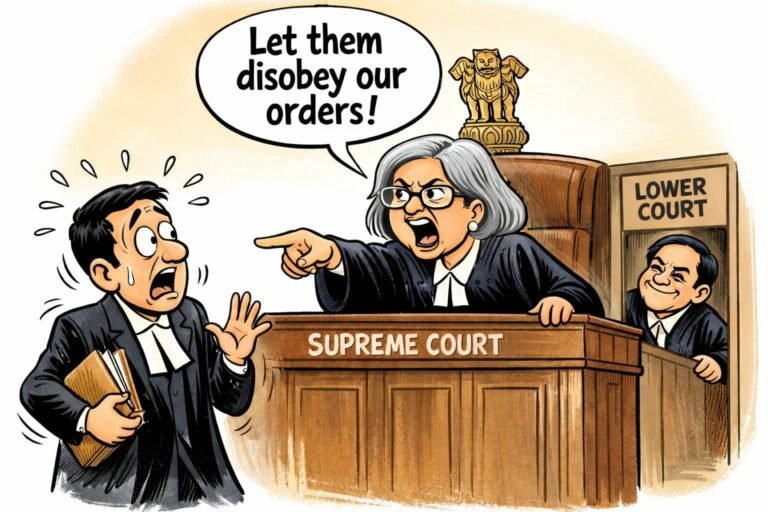
Although the petition filed by Adv. Mathew Nedumpara fell within the recognized legal parameters for maintainability, the responsibility for its dismissal rests with Adv. Nedumpara himself and not with the Hon’ble CJI, Shri Surya Kant.
The CJI Surya Kant afforded him with full opportunity by raising pertinent questions and granting adequate time for arguments. However, Mr. Nedumpara failed to properly point out the relevant legal provisions, the applicable Supreme Court Rules, and binding precedents, and instead chose to rely upon general legal maxims.
The Questions Raised by the CJI and the Proper Legal Answers
During the hearing, the Hon’ble CJI posed the following pertinent question:
Question: :- “Point out the provisions of law under which a writ petition is maintainable against an order passed by the Supreme Court. You only have the remedies of review and curative petition.”
The Proper Legal Answer :- The correct and comprehensive legal answer to the above query ought to have been as follows:
1. The writ petition in question pertains to the violation of fundamental rights caused by an order passed by the Supreme Court itself. The Supreme Court has expressly recognized that even its own orders are not beyond scrutiny when they result in infringement of basic human and constitutional rights. Remedy of review is different than the remedy of Appeal as recognized in Article 14(5) of the International Covenant on Civil and Political Rights (ICCPR). Which is binding in India as held by the Nine-Judge Constitution Bench in K.S. Puttaswamy v. Union of India, (2017) 10 SCC 1,
2. In M.S. Ahlawat v. State of Haryana, (2000) 1 SCC 278, a Three-Judge Bench of the Supreme Court entertained a Writ Petition and set aside a conviction for contempt that had earlier been imposed by a Two-Judge Bench, it was ruled that;
“When a litigant complains of miscarriage of justice by exercise of powers of this Court which is without jurisdiction or not after following due procedure resulting in his incarceration in a prison losing valuable liberty for a period with the attendant catastrophe descending on his career and life we have no option but to examine the correctness of his contention.”
3. The Five-Judge Bench of the UK Supreme Court in Her Majesty’s Attorney General v. Crosland [2021] UKSC 58 held that when a person convicted for contempt in the original jurisdiction of the Supreme Court the he must be provided at least one right of appeal before a larger bench. This reasoning is entirely consistent with the constitutional philosophy of India.
4. Similarly, a 17-Judge Bench of the United Nations Human Rights Committee, comprising Justice P.N. Bhagwati, in Anthony Michael Emmanuel Fernando v. Sri Lanka, 2005 SCC OnLine HRC 22, Luis Hens Serena v. Spain, 2008 SCC OnLine HRC 20, Chota Ratiani Vs. Georgia 2005 SCC OnLine HRC 25 (Para 11.3 & 12), Luis Olivero Capellades Vs. Spain 2006 SCC OnLine HRC 42 (Para 7 & 8), strongly condemned the arbitrary conviction and imprisonment of a citizen for contempt by the Chief Justice of Sri Lanka as arbitrary and violative of the ICCPR, and directed that adequate remedies including appellate remedy and compensation must be provided. It was further ruled that review is different than the Appeal. So ordinary review remedy is not as per the constitutional protections. These international decisions further reinforce that even orders of the highest courts are not beyond correction when they violate basic human rights and principles of fair procedure.
5. In Ram Deo Chauhan v. Bani Kanta Das, (2010) 14 SCC 209, the Supreme Court authoritatively held that whenever there is an allegation of violation of fundamental or human rights, an inquiry into such grievance is permissible and necessary. The Court further observed that even the National Human Rights Commission (NHRC) has jurisdiction to inquire into such violations and, where appropriate, to approach the Supreme Court for redress. It is ruled that The instances of this Court’s judgment violating the human rights of the citizens may be extremely rare but it cannot be said that such a situation can never happen. if a person has been guaranteed certain rights either under the Constitution or under an International Covenant or under a law, and he is denied access to such a right, then it amounts to a clear violation of his human rights and NHRC has the jurisdiction to intervene for protecting it. The jurisdiction of NHRC thus stands enlarged by section 12(j) of the 1993 Act, to take necessary action for the protection of human rights. Such action would include inquiring into cases where a party has been denied the protection of any law to which he is entitled, whether by a private party, a public institution, the government or even the Courts of law. It is observed that the majority judgment of this Court in ADM, Jabalpur case [(1976) 2 SCC 521] violated the fundamental rights of a large number of people in this country.
6. The legal position declared in Ram Deo Chauhan (supra) has been emphatically reaffirmed by the Nine-Judge Constitution Bench in K.S. Puttaswamy v. Union of India, (2017) 10 SCC 1, which reiterated that constitutional courts cannot remain powerless in the face of violation of fundamental rights, even if such violation emanates from a judicial order.
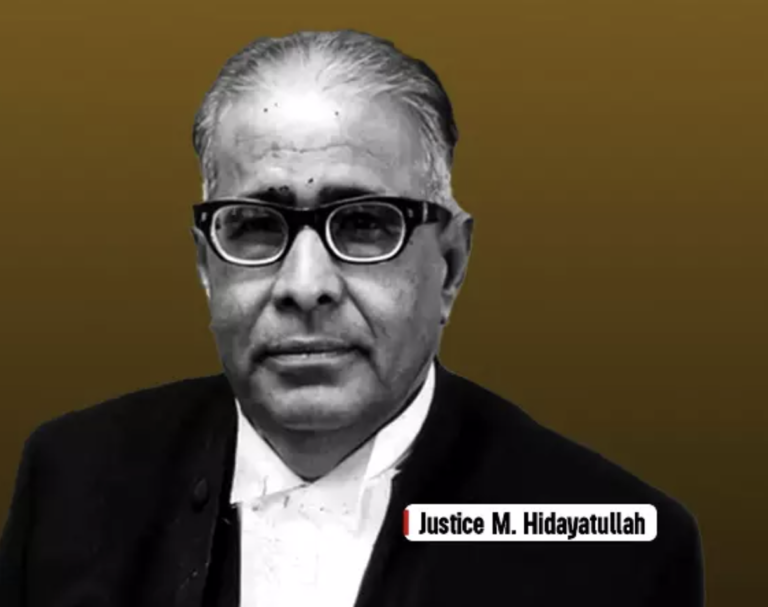
7. The issue involved in Adv. Mathew Nedumpara’s petition was not a routine challenge to a judicial order, but a challenge to an allegedly unlawful conviction order passed ex parte by Justice Rohinton Nariman without issuance of any show-cause notice, without granting any opportunity of hearing, and without framing any formal charge. Such a process, if established, would amount to a direct violation of the most elementary principles of natural justice and against the binding precedents of contempt like L.P. Misra (Dr) v. State of U.P., (1998) 7 SCC 379; Khushi Ram v. Sheo Vati, (1953) 1 SCC 726 (Constitution Bench); P. Mohanraj v. Shah Bros. Ispat (P) Ltd., (2021) 6 SCC 258 etc. .
8. The grievance therefore squarely related to the violation of fundamental rights guaranteed under Article 21 of the Constitution of India, which mandates that no person shall be deprived of liberty except by procedure established by law.
9. It further involved the violation of Article 14(5) of the International Covenant on Civil and Political Rights (ICCPR), which guarantees that every person convicted of a crime shall have the right to have his conviction and sentence reviewed by a higher tribunal according to law.
10. Article 14 (5) of ICCPR reads thus;
“5. Everyone convicted of a crime shall have the right to his conviction and sentence being reviewed by a higher tribunal according to law.”
11.The Supreme Court itself, in Dilip S. Dahanukar v. Kotak Mahindra Co. Ltd., (2007) 6 SCC 528, has clearly held that the right to at least one appeal is a facet of fair procedure under Article 21 of the Constitution and also flows from international covenants operating in the field.
12. Further, the Nine-Judge Constitution Bench in K.S. Puttaswamy v. Union of India, (2017) 10 SCC 1, have unequivocally recognised that rights guaranteed under the ICCPR and other international conventions are constitutionally protected in India and can be enforced in the same manner as fundamental rights. It has been specifically held that in the absence of any domestic law to the contrary, international conventions must be followed to protect the rights of Indian citizens.
13. In Tamilnad Mercantile Bank Share Holders Welfare Association Vs. S.C. Sekar and Ors. (2009) 2 SCC 784 it is ruled that in contempt cases even if no appeal lies then also supreme Court can pass orders under Art 142 of the Constitution and the aggrieved person cannot be left without remedy. Access to justice is a human right. In certain situations it may also be considered to be a fundamental right.
14.The judgment in Tamilnad Mercantile (supra), is upheld by the Constitution Bench in Anita Kushwaha v. Pushap Sudan, (2016) 8 SCC 509; holding that when injustice is done or when fubndamental rights are violated and when there is no remedy then Writ under art 32 is maintainable.
15.
16.
17. Accordingly, it is now well settled that the Supreme Court possesses both the inherent power and the constitutional duty to correct any order that results in manifest injustice or infringement of fundamental rights, even in the absence of any specific statutory provision. This inherent jurisdiction is expressly recognized under:
- Article 142 of the Constitution of India, which empowers the Supreme Court to pass any order necessary for doing complete justice; and
- Order XLVII Rule 6 of the Supreme Court Rules, 1966, which preserves the Court’s inherent power to make such orders as may be necessary to secure the ends of justice or to prevent abuse of its process.
18. Therefore, a writ petition invoking Article 32 to challenge an unlawful order of the Supreme Court that violates fundamental rights is legally maintainable, as recognized by binding constitutional jurisprudence.
19. Statutory Recognition Under Supreme Court Rules
Order XLVII Rule 6 of the Supreme Court Rules, 1966 expressly provides:
“Nothing in these rules shall be deemed to limit or otherwise affect the inherent powers of the Court to make such orders as may be necessary for the ends of justice or to prevent abuse of the process of the Court.”
20. This rule unequivocally recognizes that the Supreme Court possesses plenary inherent powers beyond the limited remedies of review and curative petition.
21. Recently, a Three-Judge Bench of the Hon’ble Supreme Court in Vishnu Vardhan v. State, 2025 SCC OnLine SC 1501, authoritatively dealt with the issue regarding the jurisdiction of the Supreme Court to reconsider and revisit its own earlier orders.
22. Furthermore, the law declared by the Supreme Court under Article 141 of the Constitution of India constitutes the law of the land and is binding on all courts and authorities. Larger Benches and Constitution Benches of the Supreme Court have consistently held that whenever a gross error is committed by the Supreme Court which results in serious prejudice to a citizen, or where the continuance of such an order would amount to an abuse of the process of the Court, the aggrieved person cannot be left remediless. In such exceptional circumstances, it has been authoritatively recognized that an effective remedy lies under Article 32 of the Constitution of India to seek correction of such manifest injustice.
23.Duty of a Court of Record to Correct Its Own Errors
23.1. The scope of the inherent powers of a Court of Record has been authoritatively explained by the Hon’ble Supreme Court in Municipal Corporation of Greater Mumbai v. Pratibha Industries Ltd., (2019) 3 SCC 203, wherein it was held that a Court of Record, possesses not only the power but also the duty to correct any apparent error in its own orders.
23.2. The Court relied upon the earlier judgment in M.M. Thomas v. State of Kerala, (2000) 1 SCC 666, wherein it was categorically ruled as under:
“14. The High Court as a court of record, as envisaged in Article 215 of the Constitution, must have inherent powers to correct the records. A court of record envelops all such powers whose acts and proceedings are to be enrolled in a perpetual memorial and testimony. A court of record is undoubtedly a superior court which is itself competent to determine the scope of its jurisdiction. The High Court, as a court of record, has a duty to itself to keep all its records correctly and in accordance with law. Hence, if any apparent error is noticed by the High Court in respect of any orders passed by it the High Court has not only power, but a duty to correct it. The High Court’s power in that regard is plenary.”
23.2. Application of the Same Principle to the Supreme Court :- Since Articles 129 and 215 are pari materia, the above principle applies with equal force to the Supreme Court. As a Court of Record under Article 129, the Supreme Court likewise possesses:
· Inherent jurisdiction to correct its own records,
· Power to recall or rectify orders passed in error, and
· A constitutional duty to ensure that its proceedings and orders conform to law and justice.
23.3. When these inherent powers are read together with the expansive authority under Article 142, it becomes abundantly clear that the Supreme Court is constitutionally empowered—and indeed obligated—to revisit and correct any of its orders that are found to be illegal, per incuriam, or violative of fundamental rights.
24. The Constitution Bench in K.S. Puttaswamy emphatically observed that a constitutional democracy can survive only when citizens have an undiluted assurance that the rule of law will protect their rights and liberties and that judicial remedies would always be available to question violations of those rights. This pronouncement directly answers the objection that no remedy lies against an unlawful order of the Supreme Court. Comparative jurisprudence also supports this position.
25. Therefore, the proper legal position is that remedies against unlawful orders of the Supreme Court are not confined merely to review and curative petitions. The Supreme Court, by virtue of Article 142 of the Constitution and Order XLVII Rule 6 of the Supreme Court Rules, possesses inherent powers to correct its own orders where they result in manifest injustice, violation of natural justice, or infringement of fundamental rights. Had these binding constitutional provisions and authoritative precedents been properly pointed out and placed before the Court, the issue of maintainability of the writ petition would have been considered in the correct legal perspective.
26. Recent judicial precedents further demonstrate that unlawful orders of smaller Benches of the Supreme Court have in fact been corrected by larger Benches in appropriate proceedings.
27. Constitutional Philosophy: Justice Above All :- The Constitution of India assigns a pivotal and overarching role to the Supreme Court as the ultimate guardian of fundamental rights and the rule of law. The constitutional framework proceeds on the rationale that justice is above all procedural technicalities, and that the Supreme Court cannot be rendered powerless in the face of manifest injustice.
28. Seven Judge Bench in A.R. Antulay v. R.S. Nayak, (1988) 2 SCC 602 set aside the order of Five Judge Bench which has violated the constitution rights of the petitioner.
It is ruled that ;
” But the superior court can always correct its own error brought to its notice either by way of petition or ex debito justitiae. See Rubinstein’s Jurisdiction and Illegality).”
29. Recently, in Confederation of Real Estate Developers of India v. Vanashakti, 2025 SCC OnLine SC 2474, a wrongful and per incuriam order passed by a Two-Judge Bench of the Hon’ble Supreme Court was set aside by a Three-Judge Bench. This decision once again reaffirms the settled legal position that orders of smaller Benches, if found to be contrary to binding precedents or passed in disregard of established law, are liable to be corrected by larger Benches in the interest of justice.
30. The principle that courts must always correct their own errors and steer the law back onto the correct path has been emphatically recognized by the Supreme Court of India in several authoritative pronouncements. A Seven-Judge Constitution Bench of the Supreme Court in Synthetics and Chemicals Ltd. v. State of U.P., (1990) 1 SCC 109, while dealing with the necessity of rectifying judicial mistakes, approvingly relied upon the celebrated observations of Lord Denning in Ostime v. Australian Mutual Provident Society, (1959) 3 All ER 245 : 1960 AC 459, as well as the dissenting note of Justice Jackson in Commonwealth of Massachusetts v. United States, 92 L Ed 968. In those decisions, it was observed in substance that when a court realizes that it has embarked upon a wrong course, it must make every effort to return to the correct direction, for courts of law are duty-bound to proceed on the right path rather than perpetuate an error merely in the name of finality.
31. This philosophy was further reiterated by the Supreme Court in S. Nagaraj v. State of Karnataka, 1993 Supp (4) SCC 595, which succinctly explains the inherent power of courts to review and correct their own orders in order to prevent injustice. In paragraph 19 of the judgment, the Court, relying upon fundamental principles of jurisprudence that justice is above all, observed as under:
“Review literally and even judicially means re-examination or re-consideration. The basic philosophy inherent in it is the universal acceptance of human fallibility. Yet in the realm of law the courts and even the statutes lean strongly in favour of finality of decisions legally and properly made. Exceptions, both statutorily and judicially, have been carved out to correct accidental mistakes or miscarriage of justice. Even when there was no statutory provision and no rules were framed by the highest court indicating the circumstances in which it could rectify its order, the courts culled out such power to avoid abuse of process or miscarriage of justice.”
32. These observations make it abundantly clear that the doctrine of finality cannot override the paramount consideration of justice. The Supreme Court has consistently recognized that where a judicial order results in manifest injustice, or where its continuance would amount to an abuse of the process of the Court, inherent powers must be exercised to recall, review, or rectify such orders. The jurisprudential foundation of this power lies in the universal acknowledgment of human fallibility and the corresponding duty of constitutional courts to ensure that the law ultimately operates in the service of justice
33. In Vikram Singh v. State of Punjab (2017) 8 SCC 518 a Three-Judge Bench of the Supreme Court reaffirmed the broad and inherent power of the Court to review and correct its own criminal judgments in order to prevent injustice. The Court illustrated this principle with a compelling example: if an accused has been sentenced to death by the Supreme Court and it is later discovered that the person alleged to be deceased is actually alive, thereby exposing the falsity of the evidence, would the Court be helpless to review and set aside the sentence? The Bench emphatically answered in the negative, observing that the Supreme Court cannot remain powerless in the face of such manifest injustice and must possess the authority to rectify its own erroneous orders.
34. In view of the aforesaid authoritative judgments and settled legal principles, the writ petitions filed by Adv. Prashant Bhushan, Adv. Nilesh Ojha, Adv. Vijay Kurle, and Shri Rashid Khan Pathan have already been admitted by a Three-Judge Bench of the Hon’ble Supreme Court and are presently posted for final hearing.
35. Had this crucial fact been properly brought to the notice of the Hon’ble Chief Justice of India by Mr. Nedumpara at the relevant stage, the Hon’ble Court would, in all likelihood, have directed that his petition be tagged and heard along with the aforesaid admitted writ petitions involving identical questions of law.
36. Nevertheless, it remains open to Mr. Nedumpara even at this stage to place these material facts on record and seek appropriate orders for tagging of his petition with the pending matters so that all similar issues may be considered together in the interest of consistency and judicial propriety.
37. Recently, a Three-Judge Bench of the Hon’ble Supreme Court in Vishnu Vardhan v. State, 2025 SCC OnLine SC 1501, authoritatively dealt with the issue regarding the jurisdiction of the Supreme Court to reconsider and revisit its own earlier orders. The Court, while examining objections to the maintainability of such reconsideration, clarified the correct legal position in unequivocal terms.
38. The Bench specifically ruled that although the Constitution does not confer any formal “intra-court appeal” jurisdiction upon the Supreme Court, this does not prevent the Court from exercising its inherent powers to recall or set aside its own orders in exceptional circumstances, particularly where such orders are shown to have been obtained by fraud. The Court observed as under:
“INTRA-COURT APPEAL
84. Firstly, we wish to clarify that we do not possess and are not exercising any “intra-court appeal” jurisdiction, as contended by learned senior counsel representing Reddy. The Constitution does not confer any such jurisdiction on us and we are conscious of the legal position. However, having so clarified, it is important to note that the principle of “fraud unravels everything” is not confined only to examining judgments rendered by the courts below but could include the unravelling of judgments of this Court as well, if at all the justice of the case before us so demands. In the former moiety of this judgment, we have discussed that Reddy has with impunity indulged in playing fraud on the courts and, therefore, his challenge to the jurisdiction of this Court must fail.
85. Moreover, as noted hereinabove, the decision in A.V. Papayya Sastry (supra) delineated that every Court, either superior or inferior – first or final – has jurisdiction in cases where a judgment of the court has been obtained by fraud to treat it as nullity.
86. Acceptance of the contention of Reddy would lead to a situation akin to a juridical cul-de-sac, where no option is available to Vishnu to assert his legal rights. Adopting a hands-off approach weighed down by the fact of existence of a judicial order of this Court of competent jurisdiction and thereby keeping it untouched (despite proof of such judicial order having been procured by fraud), would be a travesty of justice. Much of what has been said by this Court on the aspect of fraud vitiating even the most solemn of proceedings, in that case, would seem to be dead letter. On the contrary, ends of justice demand that such order(s), as might have been procured based on established fraud, must not be retained on the record of Courts of Record.
Another challenge to the maintainability of the civil appeal is on the ground that the reference of the case, by this Court using its “intracourt appeal” jurisdiction to the present bench of three judges violate the established principle of stare decisis as it refers not only a question of law but also questions of fact. While the High Court and any subsequent Bench of this Court would no doubt continue to exercise jurisdiction on the basis of the dicta in A.V. Papayya Sastry (supra),”
39. In view of authoritative pronouncement, in n Confederation of Real Estate Developers of India v. Vanashakti, 2025 SCC OnLine SC 2474, the challenge raised by Adv. Mathew Nedumpara to the order passed by Justice Rohinton Nariman assumes considerable legal significance. The impugned order against Adv. Nedumpara was founded upon an erroneous and inapplicable reliance on the decision in Leila David (6) v. State of Maharashtra, (2009) 10 SCC 337, which was applied without appreciating its limited factual context and scope. In doing so, the said order failed to consider and follow the contrary binding precedent laid down in Dr. L.P. Misra v. State of U.P., (1998) 7 SCC 379, which governs the field and lays down mandatory procedural safeguards before any conviction for contempt can be recorded.
40. Consequently, the judgment rendered by the Two-Judge Bench presided over by Justice Rohinton Nariman, including the conviction and sentence imposed upon Adv. Nedumpara, stands on legally fragile foundations. In light of subsequent larger Bench decisions reaffirming the correct legal position, the said order must be regarded as having been impliedly overruled and rendered unsustainable in law.
41. It is pertinent to note that the reliance placed on Leila David (6) (supra) was wholly misplaced. The conviction of Adv. Nedumpara was pronounced ex parte—without issuance of any notice, without framing of charges, without conducting any trial, and without granting any opportunity to defend—solely on the basis of that judgment. However, the decision in Leila David (6) was not a binding precedent for such a course of action for at least two fundamental reasons.
42. Firstly, a subsequent Three-Judge Bench of the Supreme Court has categorically clarified that the judgment in Leila David (6) was rendered in the context of cases involving acts of physical violence in court proceedings and cannot be mechanically applied to cases of alleged contempt arising out of pleadings, submissions, or legal arguments made by advocates. This distinction has been authoritatively explained in State of U.P. v. Association of Retired Supreme Court & High Court Judges, (2024) 3 SCC 1, Mehmood Pracha v. Central Administrative Tribunal, 2022 SCC OnLine SC 1029, wherein the Court clarified the limited applicability of Leila David to its own peculiar facts of extraordinary situation of physical violence and not against the Advocates.
43. Therefore, the order passed by Justice Rohinton Nariman, being contrary to binding precedents and settled principles of natural justice, clearly suffers from the vice of being per incuriam. In light of the recent larger Bench judgments, particularly in Confederation of Real Estate Developers of India v. Vanashakti (supra) and other authoritative pronouncements, the legal foundation of the said order no longer survives. The conviction and sentence imposed therein are thus liable to be treated as legally untenable and unsustainable and Writ petition of Mathew nedumpara should be heard on merits or even suo motu.
44. Additional Powers of the Supreme Court under Article 142 :- While the powers under Articles 129 and 215 are co-extensive, the Supreme Court is vested with additional and broader constitutional authority under Article 142 of the Constitution, which provides:
“The Supreme Court in the exercise of its jurisdiction may pass such decree or make such order as is necessary for doing complete justice in any cause or matter pending before it, and any decree so passed or order so made shall be enforceable throughout the territory of India.”
45. Article 142 thus confers upon the Supreme Court a plenary constitutional power to do complete justice, over and above the inherent powers that it enjoys as a Court of Record.
46. Three-Judge Bench in Som Mittal v. Government of Karnataka, (2008) 3 SCC 574, directed that every interpretation rendered by the Hon’ble Supreme Court constitutes “law declared” within the meaning of Article 141 of the Constitution of India and all courts, tribunals, judicial officers, and public authorities are constitutionally duty-bound not only to faithfully follow such law but also to ensure that no order, direction, or decision passed by them creates ambiguity, confusion, dilution, or conflict with the law already declared by the Supreme Court. Hence the law declared by the Supreme Court allowing Writ against order of the Supreme Court is the provision of law.
47. Injustice Done by the Supreme Court Later Cured :- The decision in Anokhilal v. State of M.P., (2019) 20 SCC 196 is a clear illustration of the principle that even the Supreme Court can correct its own earlier orders when they result in manifest injustice. In that case, the Supreme Court had earlier imposed death sentences on several accused persons without giving them a proper opportunity of hearing or adequate legal representation. Notices were not served in time, counsel was appointed at the last moment, and the appeals were decided without meaningful participation of the accused. On review, the Supreme Court acknowledged that its own earlier judgment had violated the principles of natural justice. Consequently, the Court recalled its own judgment, restored the appeals for fresh hearing, and upon reconsideration by a larger Bench, the accused were ultimately acquitted.