The United Nations Human Rights Committee (HRC) can now intervene and examine Adv. Nedumpara’s case concerning his arbitrary conviction for contempt by the Supreme Court and the absence of a right of appeal as mandatorily required under Article 14(5) of the ICCPR.

In several orders including Anthony Michael Emmanuel Fernando v. Sri Lanka, 2005 SCC OnLine HRC 22, decided by the United Nations Human Rights Committee (a 17-member body that included former Chief Justice of India Justice P. N. Bhagwati)—the Committee strongly condemned the imposition of imprisonment for contempt by the Chief Justice of the Supreme Court of Sri Lanka, holding the conviction to be arbitrary, disproportionate, and violative of Article 9 of the ICCPR. The Committee observed that where a person is convicted by a supreme court exercising original jurisdiction a mere review by the same court does not satisfy international standards of fairness, and and one appellate remedy by the larger Bench is mandatory. It directed the State to provide compensation to the victim and to ensure the availability of an independent appellate mechanism before a higher tribunal distinct from the original court. Similar findings and directions have been issued in other communications, including Luis Hens Serena v. Spain, 2008 SCC OnLine HRC 20; Chota Ratiani v. Georgia, 2005 SCC OnLine HRC 25 (paras 11.3 & 12); and Luis Olivero Capellades v. Spain, 2006 SCC OnLine HRC 42 (paras 7 & 8).
The Nine-Judge Constitution Bench in K.S. Puttaswamy v. Union of India, (2017) 10 SCC 1, held that the rights recognized under the Universal Declaration of Human Rights, 1948 and the International Covenant on Civil and Political Rights (ICCPR), along with other international human rights Covenants are constitutionally protected under our constitution and its violation can be challenged in the same manner as a violation of fundamental rights guaranteed under constitution of India.
In the case of Dilip S. Dahanukar v. Kotak Mahindra Co. Ltd., (2007) 6 SCC 528 it is held that one right of appeal is fundamental right under Article 21 of the Constitution and also as per International Covenants operating in the field.
In Her Majesty’s Attorney General v. Crosland [2021] UKSC 58, a Five-Judge Bench of the UK Supreme Court held that where a person is convicted for contempt by the Supreme Court itself, the individual must be afforded an effective opportunity to challenge that conviction, and any such challenge should be heard by a differently constituted and larger bench.
In Ram Deo Chauhan v. Bani Kanta Das, (2010) 14 SCC 209, the Supreme Court expressly acknowledged that judicial orders, including those of the Supreme Court, may result in violations of fundamental or human rights, and held that such grievances can legitimately be examined by statutory human rights bodies like national Human Rights Commission. This judgment was subsequently reinforced by the Nine-Judge Constitution Bench in K.S. Puttaswamy v. Union of India, (2017) 10 SCC 1.
Relying on abovesaid precedents and international human rights standards and constitutional principles concerning effective remedies, writ petitions filed by Adv. Prashant Bhushan, Adv. Nilesh Ojha, Adv. Vijay Kurle, and Rashid Khan Pathan challenging their contempt convictions were entertained by a larger Three-Judge Bench of the Supreme Court, which admitted the petitions and stayed the sentence (Prashant Bhushan v. Union of India, 2022 SCC OnLine SC 2222).
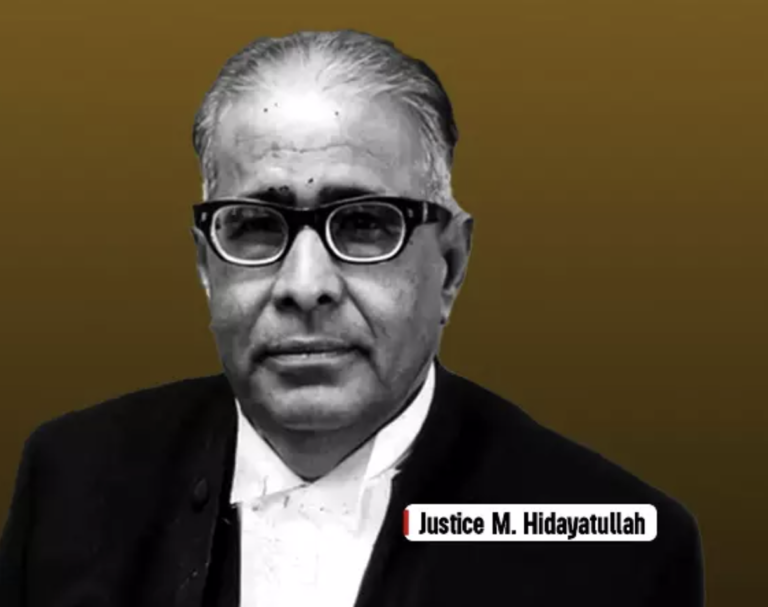
In contrast, Adv. Mathew Nedumpara—who had been convicted for contempt in 2019 by a Two-Judge Bench comprising Justices (Retd.) Rohinton Nariman and Vineet Saran—was unable to secure admission of his writ petition, reportedly due to the manner of his submissions; his petition was dismissed by another Two-Judge Bench, which held that he had not demonstrated the legal basis for the maintainability of the writ and orally indicated that he could instead pursue review or curative remedies.
Under the ICCPR and its Optional Protocol, a person who has been finally convicted without any right of appeal to a higher tribunal may directly file an individual complaint before the United Nations Human Rights Committee (HRC), as such a situation prima facie violates Article 14(5) of the Covenant. Where a conviction is rendered by a supreme court in its original jurisdiction and only discretionary remedies such as review or curative petitions before the same court are available, the HRC has repeatedly held that these do not constitute an effective appellate remedy, particularly when personal liberty is at stake.
Accordingly, if Adv. Nedumpara has no statutory right of appeal against his contempt conviction and has exhausted or lacks any effective domestic remedy, he is entitled to invoke the HRC’s jurisdiction by submitting a communication alleging violation of his ICCPR rights. Upon finding a breach, the Committee may call upon the State to provide appropriate relief, including compensation and the creation of an effective mechanism for independent appellate review.
The gravest injustice inflicted upon Adv. Nedumpara by the Bench led by Justice (Retd.) Rohinton Nariman, resulting in his conviction and declaration as guilty ex parte i.e. without framing of charges, without issuance of a show-cause notice, and without affording any opportunity of hearing:
The conviction of Adv. Mathew Nedumpara for contempt by a Two-Judge Bench comprising Justices (Retd.) Rohinton Nariman and Vineet Saran has been criticized as a grave departure from statutory and constitutional provisions and settled principles of criminal jurisprudence and natural justice, as the sentence was imposed ex parte for submissions made in court without framing any formal charge, without issuance of a show-cause notice, and without affording a reasonable opportunity of hearing.
This episode stands as one of the darkest and most troubling chapters in the history of the Supreme Court, where advocates were declared guilty ex parte—without prior notice, without framing of specific charges, and without affording any real opportunity of hearing. It amounts not merely to procedural irregularity but to a manifest denial of fair process, rendering the outcome fundamentally unjust. When punishment is imposed in secrecy, without defence or participation, it erodes the credibility of the institution itself and sends a chilling message to the legal fraternity.
Such a procedure is contrary not only to the mandatory safeguards embodied in Section 14 of the Contempt of Courts Act, 1971, which requires that the alleged contemnor be informed of the charge and given an opportunity to defend, but also to binding precedents of larger benches of the Supreme Court, including Dr. L. P. Misra v. State of U.P., (1998) 7 SCC 379 and Re: Vinay Chandra Mishra, (1995) 2 SCC 584, wherein it was unequivocally held that even in cases of serious contempt, punishment cannot be imposed without adherence to due process.
A three Judge Bench of Hon’ble Supreme Court in National Human Rights Commission Vs. State (2009) 6 SCC 767, had ruled as under;
‘‘6. […] Failure to accord fair hearing either to the accused or the prosecution violates even minimum standards of due process of law. It is inherent in the concept of due process of law, that condemnation should be rendered only after the trial in which the hearing is a real one, not sham or a mere farce and pretence.
The aforesaid principle that the right to a fair trial is a fundamental right forms an integral part of Article 21 of the Constitution and has been reaffirmed by the Nine-Judge Constitution Bench in K.S. Puttaswamy v. Union of India, (2017) 10 SCC 1.
In Windsor v. McVeigh, 93 U.S. 274 (1876), a Nine-Judge Bench of the U.S. Supreme Court emphatically held that a judgment rendered by first determining guilt or imposing punishment and only thereafter hearing the affected party is not a true judicial decision but a grave denial of due process. The Court declared that proceedings conducted in such a manner cannot be dignified as judicial proceedings at all, describing them as arbitrary edicts and substantial frauds upon justice, unworthy of recognition by any court. It observed that a tribunal which “first punishes and then hears” the party acts contrary to the most fundamental principles of natural justice—castigatque, auditque—and that such orders are mere mockeries of judicial process, liable to be treated as void and vitiated both directly and collaterally. The decision thus underscores the universal rule that no adjudication affecting rights, liberty, or property can stand unless the person concerned is given prior notice and a meaningful opportunity to be heard, failing which the resulting order is not merely erroneous but fundamentally invalid in the eyes of law.
There is yet another binding precedent squarely on point. In a similar case, an advocate, Pollard, was ex parte convicted for contempt by the Chief Justice of the Supreme Court of Hong Kong, but the Five-Judge Judicial Committee of the Privy Council in In re Pollard v. The Chief Justice of Hong Kong (1868) L.R. 2 P.C. 106 set aside the conviction, holding that contempt, being a penal and quasi-criminal offence, cannot result in punishment unless the alleged contemnor is first informed of the specific charge and given a fair and reasonable opportunity to defend.
The judgment in In Re Pollard was expressly recognized as binding and applicable in India by a Three-Judge Bench of the Supreme Court in Sukhdev Singh Sodhi v. Chief Justice S. Teja Singh, 1954 SCR 454, thereby affirming that punishment for contempt without prior notice, framing of charge, and fair opportunity to defend is impermissible in law.
The Privy Council in Ramesh Lawrence Maharaj v. Attorney General of Trinidad and Tobago (1978) 2 WLR 902 further settled that where a court convicts and punishes a person in breach of these fundamental safeguards, the State incurs liability to compensate the victim for violation of the right to a fair trial, since Judge is the executive arm of the state. Said ratio in Ramesh Maharaj’s case is follwed with approval by Supreme Court of India in Nilabati Behera v. State of Orissa, (1993) 2 SCC 746 and D.K. Basu v. State of West Bengal, (1997) 1 SCC 416.
Indian High Courts and Supreme Court in various cases granted compensation to the victim for violation of his rights by the order of the Judge or any public servant. [Walmik Bobde v. State of Maharashtra, 2001 ALL MR (Cri) 1731; Bharat Devdan Salvi & Ors. v. State of Maharashtra & Ors., 2016 ALL MR (Cri) 1239, Parashuram Detaram Shamdasani v. King-Emperor, [1945] A.C. 264 ; Mehmood Nayyar Azam v. State of Chhattisgarh, (2012) 8 SCC 1 ; S. Nambi Narayanan v. Siby Mathews & Ors., (2018) 10 SCC 804; Lucknow Development Authority v. M.K. Gupta, AIR 1994 SC 787, Directions in the Matter of Demolition of Structures, In re, (2025) 5 SCC 1,]
In McLeod v. St. Aubyn (1899 AC 549), the Judicial Committee of the Privy Council set aside a contempt conviction imposed by the Supreme Court of Jamaica, holding that the proceedings had failed to meet the minimum standards of fairness required in penal matters. Significantly, the Acting Chief Justice, Sir St. Aubyn—who had authored the impugned judgment—was himself impleaded as a party-respondent, and the Privy Council directed the Chief Justice to pay compensation be paid to the wrongfully convicted advocate. This principle that even superior court orders are not immune where liberty is unlawfully curtailed finds resonance in Indian jurisprudence as well. In Ram Deo Chauhan v. Bani Kanta Das, (2010) 14 SCC 209, the Supreme Court expressly acknowledged that judicial orders, including those of the Supreme Court, may in exceptional circumstances result in violations of fundamental or human rights, and held that such grievances can legitimately be examined by statutory human rights bodies like national Human Rights Commission. This judgment was subsequently reinforced by the Nine-Judge Constitution Bench in K.S. Puttaswamy v. Union of India, (2017) 10 SCC 1.