Legal Fraternity and various Bar Associations Praises Arnab Goswami’s programme ‘Justice Only for the Rich’.
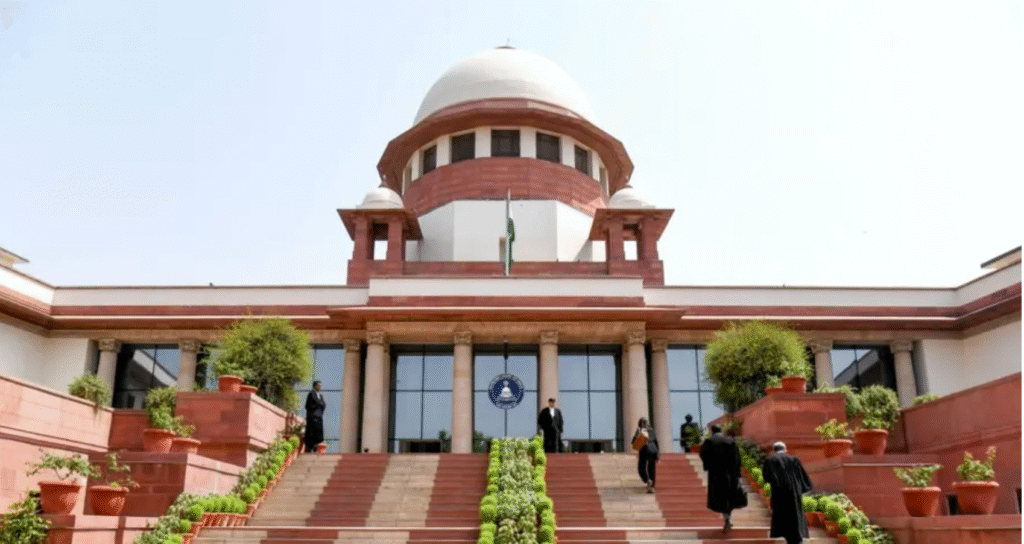
Indian Bar Association, Junior Advocates and Law Students Association of India, Supreme Court and High Court Litigants Associations, Women Wing of the IBA, Supreme Court Lawyers Association, Indian Lawyers and Human Rights Activists Association, Youth Advocates Council, All India SC, ST and Minority Lawyers Association, and leading civil society organisations commend his television programme for raising constitutional concerns and amplifying the voice of ordinary citizens.
The Junior Advocates and Law Students Association of India is steadily emerging as a significant voice within the legal ecosystem of the country, reflecting the growing participation of young advocates and law students in conversations on justice delivery and constitutional reform.
In a recent and notable development, Adv. Shivam Gupta, associated with the said Association, received a written response dated 16.12.2025 from Hon’ble CJI Justice Shri Surya Kant, acknowledging his communication and inviting constructive suggestions aimed at improving justice reforms. The letter reaffirmed the judiciary’s commitment to access to justice and the strengthening of constitutional values, underscoring the importance of inclusive dialogue between institutions and the younger members of the Bar.
Members of the legal fraternity and several jurists have described this humble and polite correspondence by CJI to a Junior Advocate as a rare and meaningful articulation of judicial conscience, particularly for its openness to reform-oriented engagement from junior members of the profession. While not unprecedented, such direct institutional responsiveness has been viewed as historically significant in spirit, symbolizing democratic humility and constitutional sensitivity. Some commentators have drawn broader comparisons—at least in ethos—to landmark letters in democratic history, including those associated with statesmen such as Abraham Lincoln, insofar as they reflect a commitment to moral responsibility, institutional introspection, and dialogue with the citizenry.
New Delhi: Several prominent Bar bodies and legal associations from across the country have publicly commended senior journalist Shri Arnab Goswami for what they described as fearless, principled, and constitutionally rooted public-interest journalism. The appreciation comes in the wake of his recent television programmes particularly through his recent television programme “Justice Only for the Rich”, that have raised critical issues of justice, accountability, and equality before law, drawing nationwide attention.
The Indian Bar Association in a public statement issued through its national president Adv. Nilesh Ojha, stated that millions of ordinary citizens continue to struggle for justice against powerful individuals and institutions, often facing silence and apathy. In such an environment, the role of a free and courageous press becomes indispensable. The IBA noted that Shri Goswami’s journalism has broken this silence by raising uncomfortable yet necessary questions before the government and the judiciary on a national platform, while consistently giving voice to the unheard.
Through his programme, Shri Goswami highlighted judicial and administrative decisions that, in public perception, have eroded confidence in equal justice under law. These discussions, the Association emphasised, are not sensational debates but serious constitutional concerns that resonate with citizens and demand public reflection.
The Indian Bar Association reiterated that fair and reasoned criticism of the judiciary is constitutionally protected. The Supreme Court itself has repeatedly recognised this principle. In Indirect Tax Practitioners’ Association v. R.K. Jain, (2010) 8 SCC 281, the Court held that exposing corruption and institutional wrongdoing in the judiciary is a fundamental duty under Article 51A and that fair criticism does not amount to contempt.
The Constitution Benches in Subramanian Swamy v. Arun Shourie, (2014) 12 SCC 344, and Bathina Ramakrishna Reddy v. State of Madras, 1952 SCR 425, have authoritatively clarified that exposing malpractices or corruption within the judiciary, when supported by substantial and bona fide material, serves a larger public interest and does not amount to contempt of court. This remains so even if such publication incidentally affects public confidence in the concerned judge or renders the discharge of judicial functions uncomfortable.
In Re: S. Mulgaokar (1978), where the Supreme Court held that fair and even strongest and fierce criticism of judges is an essential democratic right. In State of M.P. v. Narmada Bachao Andolan (2011), the Court further acknowledged that the judiciary does not claim infallibility and that informed public critique serves as an important external check promoting accountability.
The Association expressed concern that misuse of contempt jurisdiction has created a climate of fear among journalists and commentators, discouraging legitimate criticism and public debate. In this backdrop, Shri Arnab Goswami’s forthright questioning of institutions, including the judiciary, reflects democratic vigilance and a commitment to accountability.
The Junior Advocates and Law Students Association of India, through its Coordinator Adv. Abhishek Mishra, stated that Goswami’s work has particularly resonated with young advocates and law students who view robust public debate as essential to the health of constitutional democracy. The Association noted that his programmes have encouraged informed discussion on judicial accountability and access to justice.
Support was also expressed by the Supreme Court and High Court Litigants Associations, represented by Shri Rashid Khan Pathan, which highlighted that Goswami’s journalism has given voice to litigants who often feel unheard within the system. According to the Association, such public scrutiny strengthens confidence in democratic processes.
Members of the Women Wing of the Indian Bar Association, including Adv. Nicky Pocker and Adv. Sonal Manchekar, praised Goswami for foregrounding issues affecting women and vulnerable sections of society, stating that fearless journalism is crucial in ensuring that such concerns remain in public consciousness.
The Supreme Court Lawyers Association, through its Chairman Adv. Ishwarlal Agarwal, emphasised that Arnab Goswami’s journalism reflects the constitutional balance between freedom of expression and institutional accountability. He noted that transparent public discourse ultimately reinforces, rather than weakens, democratic institutions.
Human rights organisations also joined in appreciating Goswami’s work. The Indian Lawyers and Human Rights Activists Association, represented by Mr. Mursalin Sheikh, observed that his journalism has consistently highlighted issues of public concern that might otherwise escape sustained scrutiny. Similarly, the Youth Advocates Council, through Adv. Devkrishna Bhambri, described Goswami as a voice that encourages younger members of the legal fraternity to engage fearlessly with constitutional questions.
The All India SC, ST and Minority Lawyers Association, represented by Adv. Tanveer Nizam, stated that Arnab Goswami’s programmes have drawn attention to concerns of equality before law, particularly for marginalised communities. Civil society organisations, including the Human Rights Security Council, through its State Vice President Shri Shaligram Bondre, and the International Council for the Protection of Citizens’ Constitutional Rights, represented by Shri Ayush Tiwari, echoed similar sentiments.
Collectively, the Bar bodies noted that Arnab Goswami’s journalism exemplifies the role of a free press in a constitutional democracy. They emphasised that fair, fact-based criticism of institutions—including the judiciary—is recognised by the Supreme Court as constitutionally protected and essential for democratic accountability.
The associations concluded by expressing the view that Arnab Goswami’s fearless public-interest journalism has strengthened public discourse and reaffirmed faith in constitutional values. They reiterated that democracy thrives when journalists speak truth to power and when institutions remain open to scrutiny grounded in law and public interest.