Indian Bar Association Wins Big: Centre clears Justice Revathi Mohite Dere’s Transfer from Bombay High Court to Meghalaya.
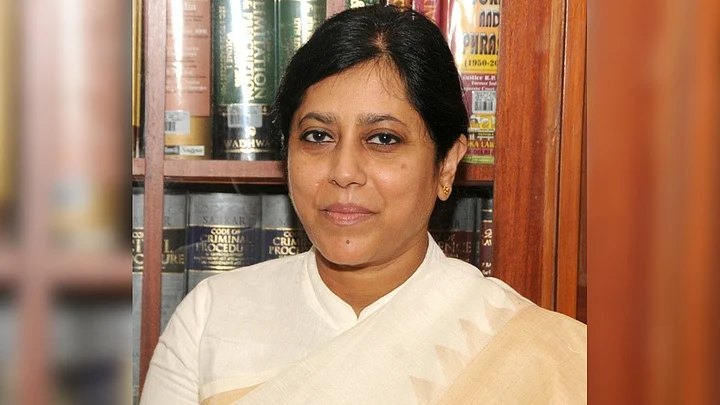
New Delhi :- In a significant institutional development, the Union Government has accepted the recommendation of the Supreme Court Collegium and cleared the transfer of Justice Revathi Mohite Dere from the Bombay High Court to the Meghalaya High Court.
Union Minister of Law and Justice Arjun Ram Meghwal confirmed the decision on Friday, clarifying that the transfer follows the movement of the incumbent Chief Justice of the Meghalaya High Court, Soumen Sen, who is set to be transferred to the Kerala High Court.
Transfer Seen as Punitive in Legal Circles
Within the legal fraternity, the transfer has been widely viewed as a punitive transfer. Observers note that the Meghalaya High Court has a sanctioned strength of only four judges—significantly smaller than several other High Courts where vacancies and elevations were simultaneously effected.
Legal analysts point out that the Collegium consciously chose not to transfer Justice Dere to larger High Courts such as Chhattisgarh or Kerala. In contrast, Justice M. S. Sonak, who is junior to Justice Dere, was elevated as Chief Justice of the Chhattisgarh High Court, a court with a sanctioned strength of 22 judges. This differential treatment is being interpreted as a clear signal that the Collegium did not repose institutional trust in Justice Dere for higher constitutional responsibilities.
Pending PIL Before Bombay High Court: Allegations to Be Adjudicated by Special Bench
A Public Interest Litigation, PIL No. 6900 of 2023, filed by the Indian Lawyers and Human Rights Activists Association through Adv. Vijay Kurle, is presently pending before the Bombay High Court. Acting on administrative directions of the Hon’ble Chief Justice, a Special Bench headed by Justice Ravindra Ghuge has been constituted to hear the matter.
The PIL seeks, inter alia, criminal prosecution of Justice Revathi Mohite Dere on allegations of forgery of High Court records and corruption, purportedly to confer undue benefit upon accused persons, including Chanda Kochhar, in a multi-crore corruption case. These allegations are contested and remain sub judice, before the Special Bench.
The petitioners are represented by Adv. Nilesh Ojha, National President of the Indian Bar Association, along with several other advocates, including Adv. Ghanshyam Upadhyay.
Legal observers note that the constitution of a Special Bench underscores the gravity of the issues raised and reflects the court’s intent to adjudicate the allegations through due process, evidentiary scrutiny, and binding constitutional principles.
IBA Calls It an Institutional Victory
The decision has been projected by the Indian Bar Association (IBA) and allied bodies as a decisive institutional victory for the Bar. According to IBA leaders, the transfer decisively punctures the narrative propagated by certain sycophantic sections of the Bar who had publicly projected Justice Revathi Mohite Dere as being “in the race” for elevation to the Supreme Court.
Senior members of the Bar remarked that the Collegium’s decision has effectively reduced such claims to ridicule, sending a clear message that sustained activism, record-based objections, and unresolved proceedings cannot be overridden by public relations campaigns or internal lobbying.
Formal Welcome by Bar Bodies
The IBA, along with the Junior Advocates and Law Students Association, has formally welcomed the decision and addressed a letter of gratitude to the Collegium. The letter terms the move a reaffirmation of constitutional accountability and underscores the principle that institutional credibility must prevail over favoritism and influence.
Campaign for Accountability to Continue
Bar leaders further stated that the decision reinforces the constructive role of the legal fraternity—particularly junior advocates and law students—in safeguarding transparency and accountability within the higher judiciary. They reiterated that their campaign will continue until all issues raised in the pending Public Interest Litigation are adjudicated strictly in accordance with law.
According to the IBA, the development marks a watershed moment in reaffirming that judicial institutions remain answerable to constitutional discipline, public confidence, and the rule of law—irrespective of rank or office.