[FACT CHECK] “Menaka Gandhi Worse Than Terrorist Kasab you should not have accepted her brief ?” — Did Justice Vikram Nath Question Senior Advocate Raju Ramchandran?
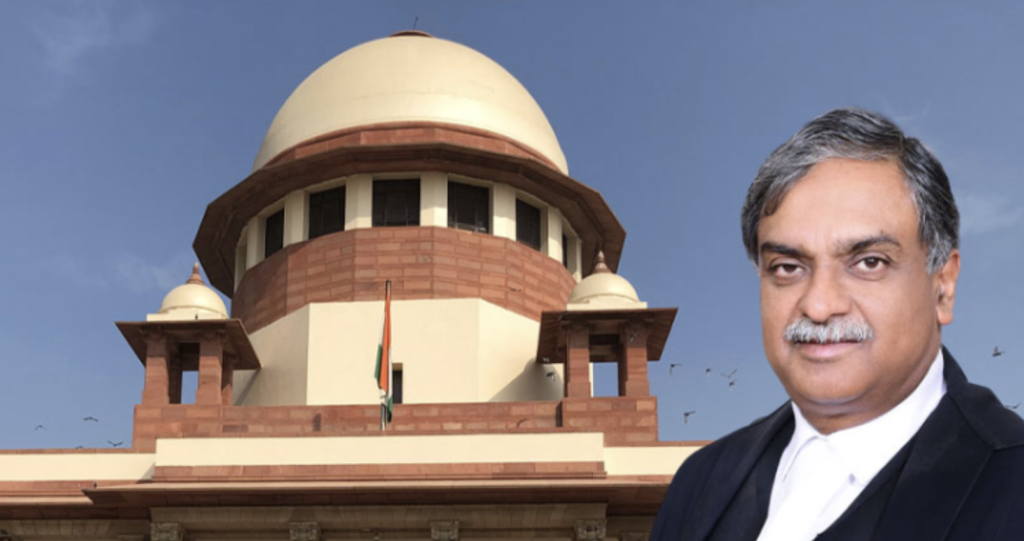
Did the Bar Association Seek the Removal of Justice Vikram Nath from NALSA Over Alleged Conduct Affecting the Core Object of Legal Aid, Access to Justice, and attack on Independence of the Bar?
What is the controversy?
A formal representation has been addressed to the Hon’ble Chief Justice of India and the Hon’ble President of India raising serious constitutional concerns arising out of certain remarks made in open court by Justice Vikram Nath, and Justice Sandeep Mehta.
Of the two matters raised in the complaint, one pertains to former Union Minister Maneka Gandhi, while the other relates to a group of seventeen to eighteen advocates. This group includes women advocates belonging to Scheduled Castes, backward classes, and minority communities. Significantly, the matter also involves Nilesh Ojha, the National President of the Indian Bar Association. As a result, the controversy is being viewed not as an issue confined to individuals, but as one that concerns the legal fraternity at large and the independence of the justice system.
The complaint is not based on conjecture or secondary reporting but relies exclusively upon video recordings of court proceedings, pleadings on record, and binding constitutional precedents.
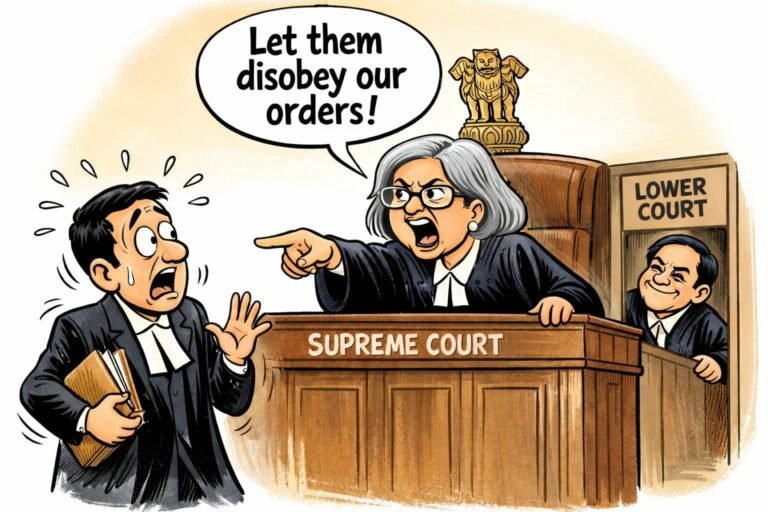
According to the complaint, during proceedings held on 20 January 2026, Justice Vikram Nath questioned Senior Advocate Raju Ramachandran regarding his professional decision to represent former Union Minister Maneka Gandhi, allegedly asking in substance, “Have you seen her podcast? Still, you have accepted her brief,” apparently on the premise that Ms. Gandhi had made remarks perceived as critical of the Judge. In response, the Senior Advocate pointed out that if he could represent a terrorist such as Ajmal Kasab, he could certainly represent Maneka Gandhi, a former Union Minister. Then Justice Vikram Nath remarked that Ajmal Kasab had not committed contempt of court, which, when read in context, conveyed an impression that while representing a convicted terrorist is professionally acceptable, but representing a person accused of contempt of court is not.
The complaint argues that this exchange, taken as a whole, creates a deeply troubling impression that Maneka Gandhi was being placed in a worse position than Ajmal Kasab and that contempt of court was being implicitly treated as a graver transgression than acts of terrorism involving mass killing of people.
According to the complainant, such remarks are aginst the bindng directions of the larger benches of the Supreme Court and constitutionally impermissible as they directly interfere with the independence of the Bar and have a chilling effect on free and fearless advocacy. It Indian constitutional law has consistently recognised that an advocate cannot be questioned, moralised, or discouraged for choosing to represent any client, irrespective of the nature of allegations against that client, and that even the most unpopular or reviled accused has an inviolable right to legal representation. The corresponding duty of advocates to defend without fear or favour is a cornerstone of the rule of law, and any judicial conduct that discourages representation undermines Articles 19(1)(g), 21, and 22(1) of the Constitution.
The complaint further points out that the seriousness of the issue is amplified by a subsequent incident on 30 January 2026 during the hearing of a criminal contempt appeal concerning the issue raised by Advocate Nilesh Ojha and sixteen other advocates, arising from a High Court order finding them guilty of contempt for allegedly making allegations of corruption against Justice Revathi Mohite Dere.
It is alleged that during the said hearing, remarks emanating from the Bench comprising Justices Sh. Vikram Nath and Sh. Sandeep Mehta conveyed that, in the contempt proceedings, the party could be sentenced and committed to jail forthwith, without any trial, without issuance of notice, and without being afforded an opportunity of defence or legal representation. It was further indicated more particularly by justice Sandeep Mehta that advocates ought not to have represented the appellant at all. According to the complaint, the availability of video recordings of the proceedings assumes critical significance, as they faithfully capture the nature, context, and tenor of the remarks made in open court which will rule out any possibility of slightest doubt about the accusations.
From a legal standpoint, the complaint stresses that contempt of court is a criminal offence and that persons accused of contempt are entitled to the same constitutional protections as any other accused, including notice, hearing, representation by counsel, and adherence to due process. This position has been reiterated by Constitution Benches and larger Benches of the Supreme Court, whose judgments are binding on all smaller Benches. [ Hari Dass v. State of Punjab, AIR 1964 SC 1773; Khushi Ram v. Sheo Vati, (1953) 1 SCC 726(5-J) ; P. Mohanraj v. Shah Bros., (2021) 6 SCC 258(3-J) ; National Fertilizers Ltd. v. Tuncay Alankus, (2013) 9 SCC 600 ; Bloom v. State of Illinois, 1968 SCC OnLine US SC 93(9-J).]
The complaint relies on a long line of precedents to argue that failure to follow larger Bench judgments amounts to judicial impropriety and may even constitute civil contempt, and that judges cannot plead ignorance of binding law. In Subrata Roy Sahara v. Union of India, (2014) 8 SCC 470, Supreme Court categorically held that a smaller bench of supreme court if fails to follow the law laid down by a Larger Bench then the smaller bench is liable for civil contempt.
It further asserts that where allegations of corruption against Jusrtice Revathi Mohite Dere are made and supported by material such as CBI court orders and investigative reports, the law mandates that such allegations be examined through appropriate criminal and disciplinary processes. Conversely, using contempt jurisdiction to silence or intimidate advocates from exposing alleged judicial corruption is characterized as a misuse of judicial power and an abuse of the contempt jurisdiction.
The complaint goes a step further to allege that remarks suggesting the appellant being part of the system should not have done such exposures , which amount to an attempt to shield an accused Judge from scrutiny and to threaten advocates into silence through the authority of the court. Such conduct, it is argued, not only undermines public confidence in the judiciary but also violates the constitutional duty under Article 51-A to expose wrongdoing and the professional obligations imposed by the Bar Council of India Rules. [Nirbhay Singh Suliya v. State of Madhya Pradesh, 2026 INSC 7; Indirect Tax Practitioners’ Association v. R.K. Jain, (2010) 8 SCC 281; Subramanian Swamy v. Arun Shourie, (2014) 12 SCC 344; Bathina Ramakrishna Reddy v. State of Madras, 1952 SCR 425; R. Muthukrishnan v. High Court of Madras, (2019) 16 SCC 407; Aniruddha Bahal, 2010 (119) DRJ 102]
The complaint makes it abundantly clear that, as per settled law—and more particularly as summarised by the Hon’ble Supreme Court in Nirbhay Singh Suliya v. State of Madhya Pradesh, 2026 INSC 7. Where it is ruled that if allegations of corruption made against Justice Revathi Mohite Dere are false, frivolous, or unsubstantiated, then the advocate making such allegations is liable to be proceeded against under contempt jurisdiction, for perjury, and also before the Disciplinary Committee of the Bar Council. However, the law equally mandates that where such allegations are true and substantiated by material on record, the Court is duty-bound to take appropriate action against the concerned Judge in accordance with law.
The complaint further asserts that without first verifying the truth or otherwise of the allegations, the complainants and advocates cannot be intimidated, threatened, or silenced by invoking the contempt jurisdiction. Any attempt to do so amounts to a misuse of contempt powers, defeats the ends of justice, and undermines the constitutional duty to expose wrongdoing, particularly where serious allegations of judicial corruption are supported by credible material.
According to the complainant, when advocates are intimidated for discharging their constitutional and professional duties, it is not merely an individual grievance but an institutional crisis, because the chilling of defense advocacy ultimately deprives citizens—particularly women activists, dissenters, and marginalized persons—of effective access to justice.
It has caused serious concern and disquiet among large sections of the legal fraternity that Justice Vikram Nath continues to hold the office of Executive Chairman of NALSA—a statutory and constitutional body entrusted with the critical mandate of ensuring access to justice and effective legal representation for all citizens, particularly women, marginalized communities, and other vulnerable sections of society. The apprehension expressed is that the alleged conduct does not remain confined to individual cases, but has a wider systemic impact, amounting to an attack on the profession of advocacy itself and a direct inroad upon the independence of the Bar. The India Lawyers and Human Rights Activists Association, the Indian Bar Association, and various other Bar Associations have sought the removal of Justice Vikram Nath from the position of Executive Chairman of the National Legal Services Authority (NALSA) over alleged conduct that, according to them, strikes at the very core objectives of the legal aid system and the constitutional guarantees of a fair trial and the right of an accused to be defended by a lawyer of one’s own choice. It is contended that such conduct has grave constitutional implications and amounts to a violation of the guarantees enshrined under Articles 14, 19, 20, 21, 39-A, and 51-A of the Constitution of India. The Supreme Court, in A.S. Mohammed Rafi v. State of Tamil Nadu, (2011) 1 SCC 688, and in several other judgments, has explicitly held that it is not only the right but the duty of a lawyer to defend even the vilest or most unpopular accused, and that any attempt to prevent, discourage, or intimidate an advocate from discharging this duty is unconstitutional and contrary to the highest traditions of the Bar. The Court has categorically condemned practices that stigmatise defence counsel or create an atmosphere where advocates are dissuaded from representing particular clients or causes.
The concerns raised by the Bar Associations acquire added gravity in light of the settled legal position, particularly because the judicial remarks perceived as implicitly stigmatizing defence counsel are attributed to a sitting Judge of the Supreme Court who presently holds the office of Executive Chairman of NALSA—an institution constitutionally and statutorily mandated to strengthen, not undermine, the right to legal representation—and who is also in line to assume the office of Chief Justice of India in due course.
Ordinarily, when any wrong is committed, the remedy lies before a court of law; however, when injustice is perceived to emanate from the second senior-most Judge of the Supreme Court itself, the impact is far more profound, as it has the potential to shake the confidence of the legal community and the nation at large in the justice delivery system. In such circumstances, the common citizen often feels helpless, perceiving that injustice has been done by the highest constitutional court and that no effective or accessible remedy is available. For many, particularly those lacking resources or institutional support, there is neither the means nor the capacity to challenge such actions, which deepens the sense of disenfranchisement and erodes faith in the rule of law.
Any conduct or expression emanating from such a position of constitutional authority that has the effect of discouraging fearless advocacy therefore carries far-reaching implications for access to justice, public confidence in the legal system, and the continued vitality of the rule of law.
The fact-check conclusion, based strictly on the contents of the complaint and the material it refers to, is not a declaration of guilt or innocence against anyone, but a recognition that the allegations, if accurately reflected by the video and record, raise serious and non-trivial constitutional questions. These include the independence of the Bar, the scope and limits of contempt jurisdiction, adherence to binding precedent, and the obligation of judicial restraint in open court.
The issues raised therefore warrant careful institutional scrutiny, not because of who the parties are, but because fearless advocacy and fair trial rights are foundational to constitutional democracy. When lawyers are discouraged from defending certain clients, the erosion is not limited to the Bar; it strikes at the very heart of the rule of law and offends the basic foundation of constitution of India.