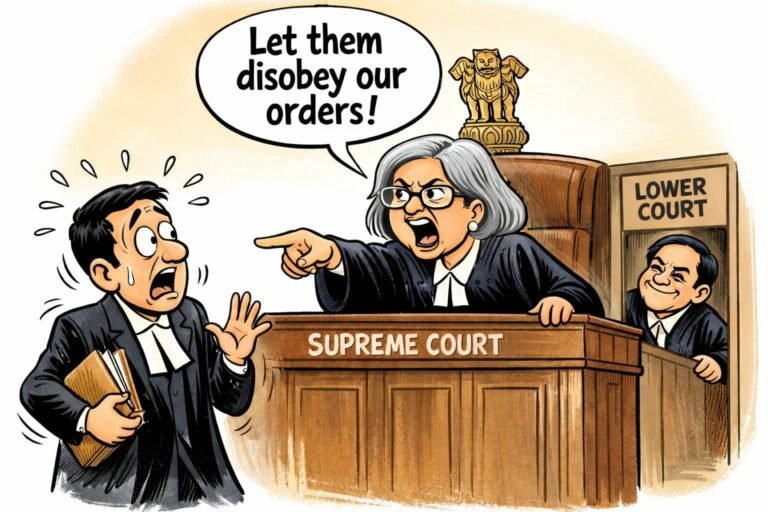
BREAKING | CJI Surya Kant Flags Corruption by Judges Nearing Retirement Through Passing Various Orders — Judges Passing Dishonest, Motivated or Extraneously Influenced Orders Cannot Claim Protection; Immunity Assumption Rejected, Relief Denied to Suspended Judge.
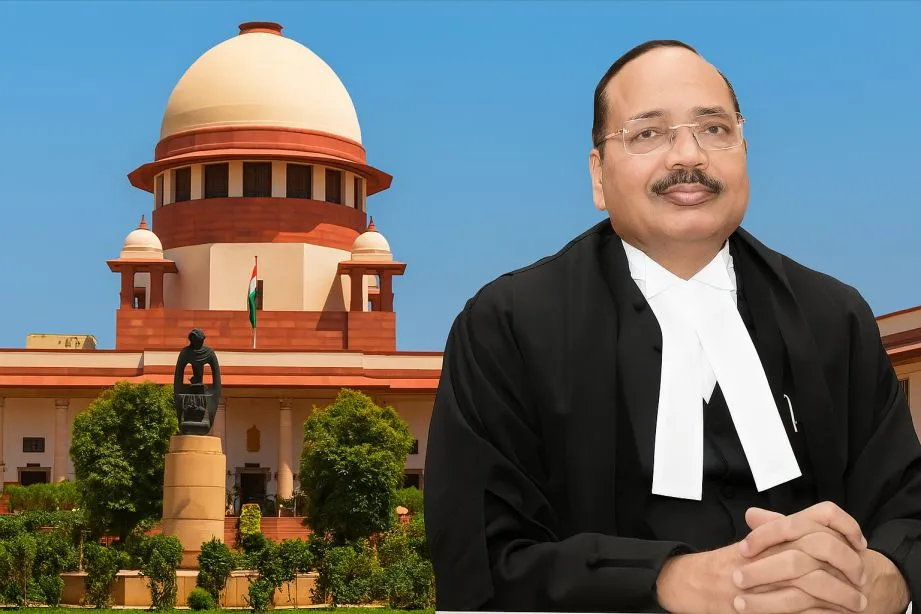
[Rajaram Bhatiya v. High Court of M.P., Order dated 17.12.2025]
Judges Who Deliberately Prolong Hearings by Granting Repeated and Unnecessary Adjournments, Causing Delay in the Justice Delivery System, Are Liable to Dismissal — Landmark Ruling by CJI Surya Kant
In another landmark judgment authored by CJI Surya Kant, the Hon’ble Supreme Court in Sandhya Chaudhary v. State (2020) 11 SCC 760 authoritatively held that judges who take up cases out of turn or deliberately delay hearings through repeated or motivated adjournments are liable to dismissal.
Corrupt Judges as a Threat to the Nation
The Courts have further echoed the stern position that corrupt judges pose a grave threat to constitutional governance and national progress, holding that judicial corruption is anti-national in character, as observed in R. Rajaraman v. The Chief Engineer (2019 SCC OnLine Mad 4661).
Fraud on Power & Judicial Dishonesty
It is now settled law that judges who:
• ignore the arguments of parties,
• disregard material on record,
• omit or fail to consider binding precedents, or
• pass orders contrary to law to benefit special advocates or influential persons for reasons beyond the record,
are guilty of “fraud on power,” “judicial dishonesty,” “corrupt practices,” “judicial adventurism,” and “civil contempt,” and must be removed from office. Where the order itself is demonstrably contrary to law and facts, no further proof is required.
Such conduct constitutes a violation of the Constitution and a breach of the oath administered by the President of India, thereby forfeiting the right to continue as a judge.
Statutory Liability & Prosecution
There exist clear statutory provisions for prosecution of corrupt and dishonest judges under the Bharatiya Nyaya Sanhita / IPC (including Sections 166, 167, 218, 219, 220, 409, 466, 471, 474, 120B, 107, 109, etc.) and Section 7A of the Prevention of Corruption Act, among others.
This position is supported by authoritative precedents, including:
Shrirang Waghmare v. State of Maharashtra (2019) 9 SCC 144;
Muzaffar Hussain v. State (2022 SCC OnLine SC 567);
R.R. Parekh v. High Court of Gujarat (2016) 14 SCC 1;
Ratilal Jhaverbhai Parmar v. State of Gujarat (2024 SCC OnLine SC 2985);
Kamisetty Pedda Venkata Subbamma v. Chinna Kummagandla Venkataiah (2004 SCC OnLine AP 1009);
Vijay Shekhar v. Union of India (2004) 4 SCC 666;
State of Odisha v. Pratima Mohanty (2021 SCC OnLine SC 1222);
State Bank of Travancore v. Mathew K.C. (2018) 3 SCC 85;
Further details on prosecution of corrupt and dishonest judges, along with model drafts, are available on the website of the Indian Bar Association.
Clear message from the Court:
⚖️ Judicial independence protects integrity—not corruption.