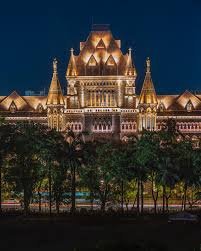
Bombay High Court Clarifies Limits of Registrar’s Powers in Cooperative Societies — Registrar Has No Authority to Decide Individual Rights

In a significant development strengthening judicial accountability and the rule of law, the Indian Bar Association (IBA) has announced that it will soon organize special training camps across the country. These programs aim to provide in-depth legal training on how to initiate action against public servants, including judicial and quasi-judicial authorities, who misuse their powers, engage in corruption, or act contrary to law.
The training camps will equip citizens, lawyers, and social activists with practical knowledge based on guidelines and binding precedents laid down by the Hon’ble Supreme Court and various High Courts. Participants will be trained to identify dishonesty, bias, abuse of power, or corruption by critically reading and analyzing judicial orders and judgments, and to understand the appropriate legal remedies available against such injustice.
The program will specifically focus on:
• How to initiate criminal prosecution against corrupt public servants,
• How to seek suspension, dismissal, or removal from service, and
• How to enforce personal liability and compensation against such officials, so that citizens who have suffered due to misconduct can obtain effective redress.
According to the Indian Bar Association, this nationwide initiative is a major step toward strengthening the rule of law, curbing corruption in public administration, and empowering citizens to assert their constitutional rights. This information was shared by Advocate Nilesh Ojha, National President of the Indian Bar Association.
Bombay High Court Decision: Registrar Cannot Adjudicate Disputes or Decide Legal Rights
In a parallel and highly consequential ruling, the Bombay High Court has delivered a landmark judgment clearly defining the limits of the powers of the Registrar of Cooperative Societies. The Court has categorically held that the Registrar or any administrative authority has no power to give final or conclusive decisions concerning individual rights, ownership, liabilities, or legal entitlements.
Order Directing Refund of Maintenance Charges Set Aside
In the case concerning a cooperative housing society, the High Court quashed an order passed by the Registrar directing the society to refund maintenance charges collected from its members. The Court held that under Section 154B-27 of the Maharashtra Cooperative Societies Act, 1960, the Registrar does not possess adjudicatory powers, nor can the Registrar decide whether levies or charges are legally valid. The judgment was delivered by Justice Amit Borkar.
No Adjudicatory Power Without Statutory Authority
Justice Borkar emphasized that the power to adjudicate disputes—that is, to hear parties and decide conflicting legal rights—must be expressly conferred by statute. Such power cannot be presumed or derived from model bye-laws or executive instructions.
The Court clearly observed:
“The powers of the Registrar under Section 154B-27 are confined only to enforcement. The Registrar has not been conferred adjudicatory authority to decide disputes involving conflicting rights of parties.”
Background of the Case
The dispute involved M/s. Aether Cooperative Housing Society Ltd. and several of its members regarding the recovery of maintenance charges. The members approached the Divisional Joint Registrar by invoking Section 154B-27(1) read with Model Bye-law 174, alleging that the society had recovered charges contrary to its bye-laws.
The Registrar directed the society to refund maintenance charges collected from May 2022 onwards and to issue revised bills. The society challenged this order before the Bombay High Court, contending that the Registrar had acted without jurisdiction.
Enforcement vs. Adjudication — A Clear Distinction
The High Court drew a clear legal distinction between:
• Enforcement: Issuing directions to ensure compliance with the Act, rules, or bye-laws — a limited administrative function vested in the Registrar; and
• Adjudication: Deciding disputed rights, determining the legality of charges, and interpreting contracts or bye-laws — a function reserved exclusively for courts or statutory adjudicatory forums.
Determining whether maintenance charges were lawful is a substantive adjudicatory exercise, which falls outside the Registrar’s authority under Section 154B-27, the Court held.
Bye-laws Cannot Override the Statute
Relying on the Supreme Court judgment in A.P.D. Jain Pathshala v. Shivaji Bhagwat More (2011), the High Court reiterated that:
“Bye-laws are subordinate to the statute. They cannot confer jurisdiction where the statute itself does not.”
The Court ruled that the Registrar’s assumption of adjudicatory power based on model bye-laws was erroneous and illegal.
Outcome and Way Forward
The orders passed by the Registrar and the Revisional Authority were set aside in their entirety. However, the Court clarified that the affected members are not precluded from pursuing their remedies before the appropriate statutory forum, such as the Cooperative Court, which is legally empowered to adjudicate disputes.
A Guiding Precedent for Cooperative Societies
This judgment is expected to serve as a guiding precedent for thousands of cooperative housing societies across Maharashtra, as it firmly establishes:
• Clear boundaries between administrative and judicial powers,
• Protection against jurisdictional overreach by Registrars, and
• Safeguarding of the constitutional right to access justice.
In essence, the Bombay High Court has reaffirmed a fundamental principle of constitutional governance:
“Administration is meant for enforcement, not adjudication.”