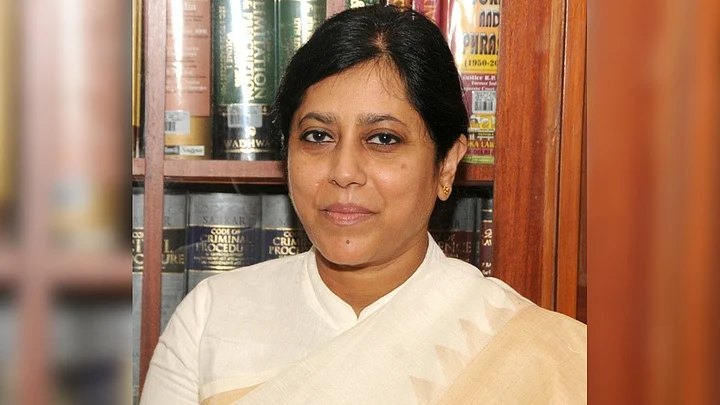
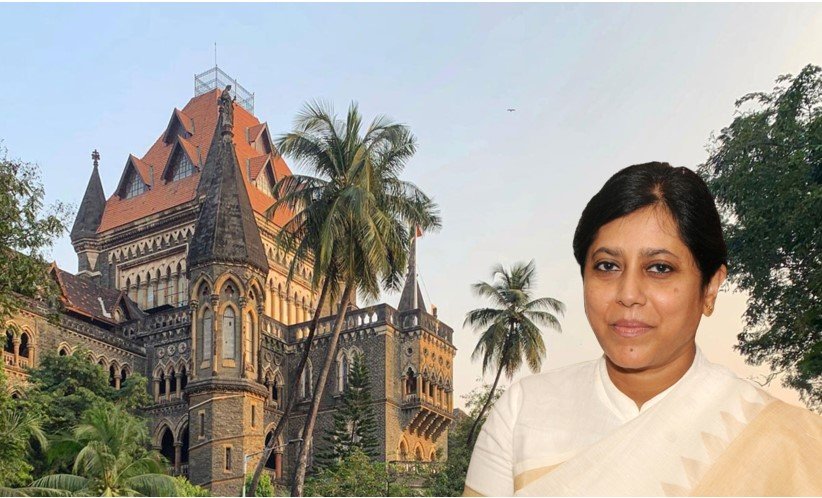
BIG BREAKING | Justice Revathi Mohite Dere Transferred from Bombay High Court to Meghalaya High Court Amid Serious Corruption Allegations
Various prominent legal and human rights organisations have welcomed the decision of the Collegium, describing it as a significant step towards institutional accountability, transparency, and restoration of public confidence in the judiciary. SSR Warriors and the organisations expressing their support include the Indian Bar Association (IBA), Supreme Court Lawyers’ Association, Supreme Court & High Court Litigants Association, and the Indian Lawyers and Human Rights Activists Association.
In a development that has triggered intense debate within legal and judicial circles, Justice Revathi Mohite Dere has been transferred from the Bombay High Court to the Meghalaya High Court. The transfer has assumed major significance in light of a long-standing controversy surrounding her name, involving serious written complaints, pending writ petitions, and documentary allegations of corruption and forgery of court records raised by multiple legal bodies and Human Rights Activists . a powerful lobby was actively sponsoring articles and opinion pieces portraying Justice Dere as a judge “deserving elevation to the Supreme Court,” even claiming her superiority over judges who were actually elevated.. However, these sponsored narratives deliberately suppressed material and crucial facts, including: The pendency of formal written complaints, Writ petitions supported by documentary evidence, Court records, and CBI and police reports, all of which were placed on record by the Indian Bar Association (IBA) and allied organisations.
“Punishment Transfer” Allegation and Judicial Context
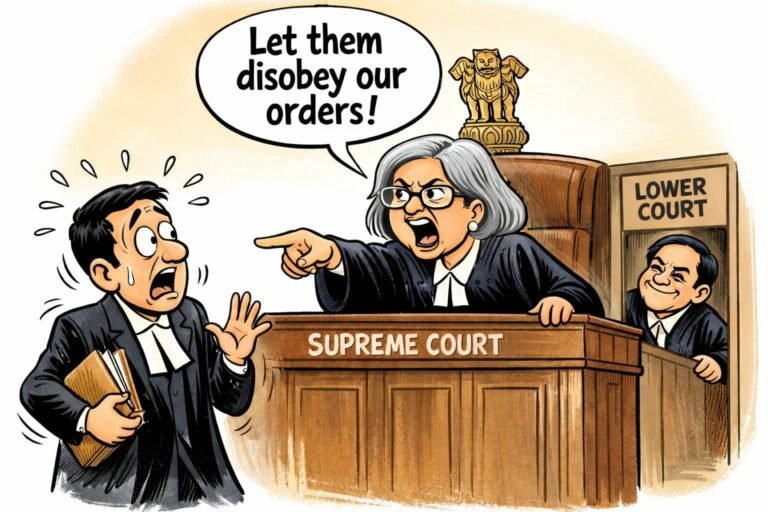
Legal commentators and bar leaders have described the transfer from a Chartered High Court like Bombay, which has a sanctioned strength of 94 judges, to the Meghalaya High Court, which has a total strength of only 4 judges including the Chief Justice, as a “punishment transfer” rather than a routine administrative posting.
It has been pointed out that a similar course was earlier adopted in the case of Justice Ranjit More, formerly of the Bombay High Court, who was also transferred to the Meghalaya High Court when he allegedly faced criminal complaints filed by various people majorly by the Indian Bar Association.
Pending PIL and Constitution of Special Bench to hear the Writ Petition against Justice Dere.
A PIL No. 6900 of 2023 is pending before the Bombay High Court, filed by Shri Mursalin Sheikh, Vice-President of the Indian Lawyers and Human Rights Activists Association, through Advocate Vijay Kurle.
In this matter, the Chief Justice constituted a Special Bench headed by Justice Ravindra Ghuge to hear the case, indicating the seriousness of the issues raised.
Role of Indian Bar Bodies and Human Rights Organisations
The complaints and representations against Justice Dere were stated to have been filed by multiple bodies, including: Indian Bar Association (IBA) , Indian Lawyers and Human Rights Activists Association, Supreme Court & High Court Litigants Association
It is informed that hundreds of advocates associated with the Indian Bar Association consistently raised objections and submitted representations over a prolonged period, alleging misuse of judicial office and manipulation of court machinery.
Five-Judge Bench, Letter Dated 04.04.2025, and Affidavit Supported by Documentary Proofs including CBI and Police reports and High Courts own records.
A decisive and legally significant turning point in the controversy, was the constitution of a Five-Judge Bench to hear the matter, which itself was triggered by a written communication dated 04.04.2025 addressed by Justice Revathi Mohite Dere. In the said letter, Justice Dere is stated to have categorically asserted that all allegations levelled against her by Adv. Nilesh Ojha in the press conference were false, baseless, and motivated, and sought judicial consideration of the issue.
Pursuant to the constitution of the Five-Judge Bench on the basis of the said letter, Advocate Nilesh Ojha, counsel for the father of late Disha Salian and National President of the Indian Bar Association, responded not merely by way of oral submissions, but by placing a detailed and sworn reply on affidavit before the Bench supported by sound proofs supported by Documentary Proofs including CBI and Police reports and High Courts own records. .
Adv. Nilesh Ojha: Publicly articulated the allegations in a press conference, asserting that the issues raised were not matters of personal grievance but involved institutional integrity and public confidence in the justice delivery system;
Filed a comprehensive reply affidavit before the Five-Judge Bench, specifically controverting the assertions made in Justice Dere’s letter dated 04.04.2025;
Placed on record documentary and contemporaneous material, including court records, official documents, and other verified materials, which, demonstrated misuse of High Court machinery, suppression and manipulation of records, and passing of orders allegedly aimed at extending undue benefit to accused persons in serious corruption matters.
On the basis of the said affidavit and accompanying material, Adv. Ojha have formally sought initiation of criminal prosecution, contending that the acts complained of went beyond mere judicial error and prima facie disclosed abuse of constitutional office and misuse of administrative and judicial processes for ulterior purposes.
Evidence Highlighted in the Affidavit :- The affidavit filed by Ojha highlights three sets of allegations, described as instances of judicial dishonesty, forgery of court records, and conflict of interest:
(i) Forgery in the Chanda Kochhar Bail Matter:
It is alleged that while granting bail to Smt. Chanda Kochhar in Criminal Writ Petition (St.) No. 22494 of 2022, Justice Mohite-Dere deliberately omitted to record Section 409 IPC, an offence punishable with life imprisonment, and instead falsely noted in her order dated 09.01.2023 that the maximum punishment was only seven years. This, according to Ojha, was done to bring the case within the protective ratio of Arnesh Kumar v. State of Bihar, (2014) 8 SCC 273. Furthermore, the Judge is accused of ignoring the order of the Special CBI Judge and thereby acting in violation of binding guidelines laid down by the Supreme Court in Ram Pratap Yadav v. Mitra Sen Yadav, (2003) 1 SCC 15.
(ii) Forgery in the Dilip Mohite Bail Matter:
Ojha’s affidavit further alleges that in granting bail to NCP MLA Dilip Mohite in ABA No. 1621 of 2019, by orders dated 26.07.2019 and 21.08.2019, the learned Judge deliberately concealed material facts. Specifically, she is alleged to have suppressed that Section 307 IPC (attempt to murder) had been invoked against the accused based on evidence showing a conspiracy to kill a police officer and to attack a police station. An earlier order dated 19.07.2019, which explicitly recorded these findings, was allegedly kept out of consideration to facilitate bail. This, according to Ojha, constitutes judicial dishonesty and fraud on power, as recognised in Muzaffar Husain v. State of U.P., 2022 SCC OnLine SC 567, and Kamisetty Pedda Venkata Subbamma v. Chinna Kummagandla Venkataiah, 2004 SCC OnLine AP 1009.
(iii) The affidavit also underscores a serious conflict of interest arising from the fact that Smt. Vandana Chavan, former Member of Parliament and prominent leader of the NCP (Sharad Pawar faction), is the real sister of Justice Revathi Mohite-Dere. It is alleged that the learned Judge has, on several occasions, extended unwarranted reliefs to individuals associated with that political faction, while simultaneously adopting a discriminatory and hostile approach towards litigants perceived to be opposed to the party’s ideology—including members and policies of the BJP-led government. According to Ojha, this family connection gravely compromises the standard of judicial impartiality expected of a High Court Judge and has the effect of vitiating orders passed in politically sensitive cases, thereby undermining public confidence in the fairness and independence of the judiciary.
Bar Bodies and Legal Organisations Welcome Collegium’s Decision
Various prominent legal and human rights organisations have welcomed the decision of the Collegium, terming it a step in the direction of institutional accountability, transparency, and restoration of public confidence in the judiciary.
Among the organisations that have publicly expressed their welcome and support are:
• Indian Bar Association (IBA)
• Supreme Court Lawyers’ Association
• Supreme Court & High Court Litigants Association
• Indian Lawyers and Human Rights Activists Association
These bodies have collectively stated that the decision of the Collegium reflects a responsible and timely response to serious and substantiated grievances placed on record through formal complaints, affidavits, and court proceedings. They have emphasized that while judicial independence must be preserved, judicial office cannot be insulated from scrutiny where grave allegations supported by documentary material are pending consideration before constitutional courts.
The organisations further observed that the decision sends a clear message that perception management, sponsored narratives, or selective media portrayals cannot override court records, pending writ petitions, and sworn affidavits. According to them, the Collegium’s action reinforces the principle that institutional credibility is best protected by proactive corrective measures rather than by silence or inaction.
They have also expressed hope that the pending proceedings, including writ petitions and public interest litigation, will now be examined objectively and without any institutional constraints, in the larger interest of justice, rule of law, and public faith in the judiciary.