Bar Council Elections: Indian Bar Association Sets Conditions for Support
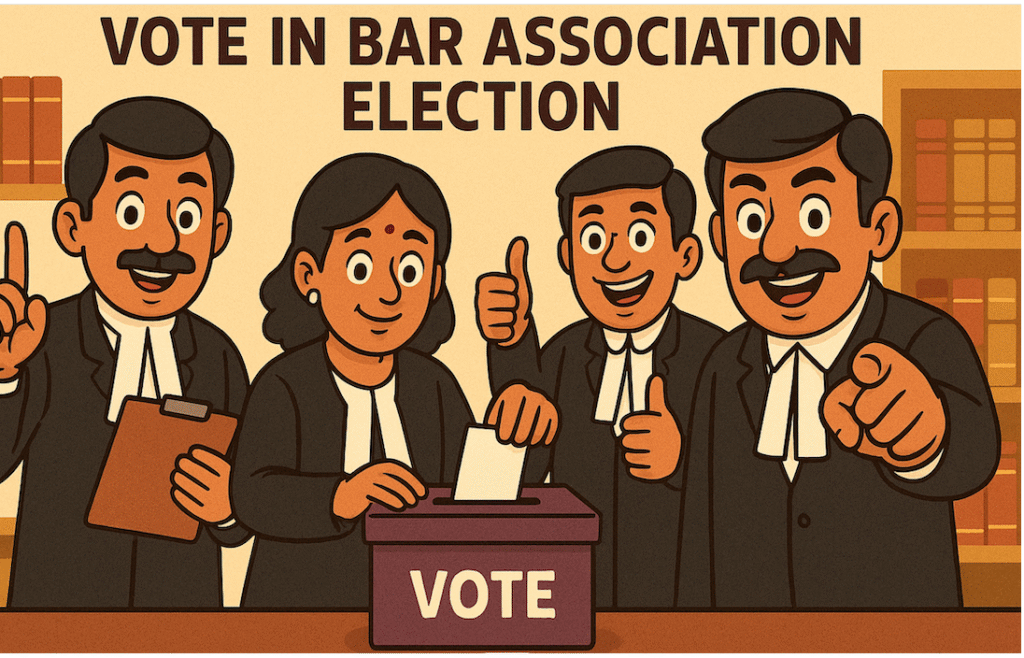
Mumbai/New Delhi: The Indian Bar Association (IBA) has laid down a set of clear and principled conditions for extending support to candidates contesting forthcoming Bar Council elections, stressing that the process must reinforce the independence of the Bar, uphold the rule of law, and protect the dignity of advocates.
According to the Association, only those candidates who demonstrate a firm commitment to the independence of the Bar and the Bench, oppose corruption without fear, and stand for constitutional values will receive its backing.
In a strong message to the legal fraternity, the IBA has urged advocates not to support candidates who, driven by personal interests, engage in sycophancy towards corrupt or unjust judicial officers, or who lend uncritical and submissive support to acts of corruption and abuse of authority. The Association stressed that honest, upright, and conscientious judges form the backbone of the justice delivery system and must be protected, respected, and supported, while corrupt, dishonest, arrogant, harsh, rude, or incompetent judges cannot be shielded under the guise of judicial independence and must face strict action in accordance with law.
The Association observed that such conduct undermines not only the autonomy of the Bar but also public confidence in the justice delivery system, which rests on independence, accountability, and ethical leadership. Bar Councils, it noted, are statutory bodies entrusted with regulating the legal profession and must therefore be led by individuals of integrity and independence.
Emphasising the role of advocates in preserving constitutional governance, the IBA stated that the forthcoming elections present an opportunity for the Bar to reject compromise and opportunism, and to instead elect representatives committed to professional dignity, transparency, and the rule of law.
The IBA reiterated that the credibility of the legal profession depends on the collective resolve of advocates to choose leadership that reflects principle over expediency and accountability over patronage.
1) Firm Commitment to the Independence of the Bar and the Bench
The candidate must make a clear and active commitment to safeguarding the independence of both the Bar and the Bench.
Where the independence of the Bar is undermined by judicial conduct, or where advocates—particularly junior advocates—are subjected to insulting, degrading, or oppressive treatment, the candidate must fearlessly step forward to raise such grievances and extend full support to the affected advocates.
2) Stand Against Corruption and Blind Support
The candidate must stand firmly on the side of law and justice.
When active members of the Bar or vigilant citizens expose judicial corruption, the candidate must unequivocally oppose any blind or mechanical resolutions seeking to shield judges facing credible allegations of corruption. Judicial accountability cannot be sacrificed in the name of misplaced solidarity.
3) Status of Advocates: “Officers of the Court”
The candidate must actively pursue appropriate legal remedies—by filing petitions before the High Court or the Supreme Court, or by securing necessary rules or directions—to ensure that:
- All administrative authorities and police agencies are expressly directed
- To treat advocates as “Officers of the Court”, and
- To accord them the same dignity, respect, and protection as extended to judicial officers.
4) Advocate’s Right and Duty to Raise Complaints Without Fear
Courts have consistently held that:
“An advocate is not required to be servile. Where there exist reasonable and substantial grounds for a serious complaint against a judicial officer, it is not only the right but also the duty of the advocate to place such grievances before appropriate authorities.”
The Supreme Court, in several binding judgments, has cautioned that reducing the Bar to a state of fear, sycophancy, or subservience is impermissible and destructive of the fair administration of justice.
This position is supported by several authoritative and binding decisions, including Latief Ahmad Rather v. Shafeeqa Bhat, 2022 SCC OnLine J&K 249; Ghanshyam Upadhyay v. State of Maharashtra, 2017 SCC OnLine Bom 9984; Arnab Ranjan Goswami v. Maharashtra State Legislative Assembly, 2020 SCC OnLine SC 1100; H. Syama Sundara Rao v. Union of India, 2006 SCC OnLine Del 1392; Jai Chaitanya Dasa, 2015 SCC OnLine Kar 549; and Court on Its Own Motion v. DSP Jayant Kashmiri, 2017 SCC OnLine Del 7387, Harish Chandra Mishra v. Hon’ble Mr. Justice S. Ali Ahmed, 1985 SCC OnLine Pat 213; R. Muthukrishnan v. High Court of Madras, (2019) 16 SCC 407; Chetak Construction Ltd. v. Om Prakash, (1998) 4 SCC 577, Muhammad Shafi v. Choudhary Qadir Bakhsh, 1949 SCC OnLine Lah 14, Neeraj Garg v. Sarita Rani, (2021) 9 SCC 92, Dushyant Mainali v. Diwan Singh Bora, 2024 SCC OnLine SC 5178.
among many other landmark rulings.
These judgments consistently affirm that advocates are “Officers of the Court” and are entitled to the same dignity, respect, and professional courtesy as judicial officers in every court of law. The courts have categorically held that the rights and professional status of advocates cannot be curtailed by any means, including intimidation, humiliation, or threats of contempt proceedings.
While a judge is fully empowered to regulate and control proceedings in the courtroom to ensure orderly administration of justice, no judge has the authority to make personal, derogatory, or intimidating remarks against advocates, nor to threaten them for discharging their professional duties. Any such conduct amounts to a serious abuse of judicial power. The law is clear that if a judge oversteps these constitutional and legal limits, such conduct may expose the judge himself to legal consequences, including action for contempt, defamation, and prosecution under penal law, now governed by the Bharatiya Nyaya Sanhita (BNS).
However, due to a lack of legal awareness and institutional understanding among certain members of the Bar, coupled with vested interests and proximity to corrupt, dishonest, and erring judges, the independence of the Bar is steadily being compromised. Instead of acting as a constitutional shield for justice, some sections of the Bar have allowed convenience, fear, or personal gain to override professional duty.
This erosion of Bar independence has consequences far beyond individual cases. It weakens the collective voice of advocates, normalises judicial overreach and misconduct, and undermines public confidence in the justice delivery system. More alarmingly, it creates a damaging precedent for young and future generations of advocates, who may be led to believe that silence, submission, or complicity is the price for professional survival. If left unchecked, this trend risks transforming the Bar from a fearless institution of constitutional guardians into a compliant appendage of power—an outcome fundamentally incompatible with the rule of law and democratic governance.
Accordingly, all candidates seeking support are required to solemnly take an oath to uphold truth, law, and justice, and to unequivocally oppose corruption, dishonesty, abuse of authority, and institutional misconduct in any form. This oath is not a symbolic gesture, but a binding moral and professional commitment to protect the independence of the Bar, defend constitutional values, and act without fear or favour against injustice—irrespective of the status or position of those involved.