Indian Bar Association Welcomes Landmark Supreme Court Judgment Protecting Honest Judges and Genuine Complainants; Directs High Courts to Initiate Disciplinary and Criminal Action Against Errant Judges Where Complaints Are Found to Be True
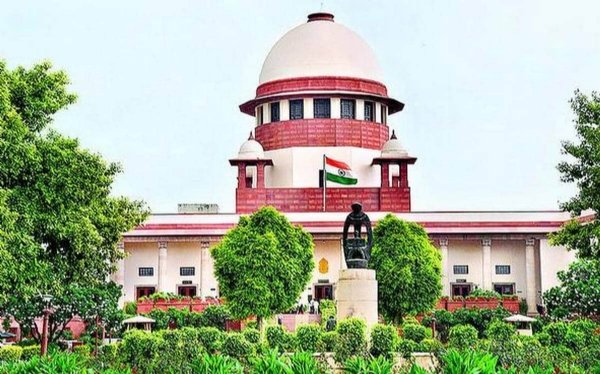
New Delhi | January 2026: The Indian Bar Association has wholeheartedly welcomed the landmark judgment of the Hon’ble Supreme Court in Nirbhay Singh Suliya v. State of Madhya Pradesh (2026 INSC 7), delivered at the very opening of the New Year 2026. The decision represents a historic and balanced reaffirmation of judicial integrity, simultaneously protecting honest judges from frivolous attacks while mandating firm action against dishonest and corrupt judicial officers.
Twin Pillars of the Judgment: Protection and Accountability
The Hon’ble Supreme Court has laid down clear, enforceable principles to ensure that:
1. Honest judges are shielded from false, motivated, and vexatious complaints intended to browbeat or malign them; and
2. Genuine complainants are protected, and corrupt judges are prosecuted where misconduct is prima facie established.
The Court has categorically directed that strict and strong action in accordance with law must be taken against individuals who file false and frivolous complaints against judicial officers. Such action may include, in appropriate cases, proceedings for contempt of court.
Action Against Frivolous Complainants and Errant Advocates
The Supreme Court has further held that if a false or frivolous complaint is engineered or filed by a recalcitrant member of the Bar, the High Court must not stop at contempt proceedings alone, but should also refer the matter to the concerned Bar Council for disciplinary action. Bar Councils, upon receipt of such references, have been directed to dispose of the proceedings expeditiously, thereby ensuring institutional discipline within the legal profession.
No Shield for Corruption: Prosecution Where Warranted
At the same time, the judgment sends a powerful message of zero tolerance for judicial misconduct. The Court has unequivocally ruled that:
- Where a complaint against a judicial officer is prima facie found to be true, prompt disciplinary proceedings must be initiated;
- No leniency should be shown if charges are established; and
- In appropriate cases involving criminality, the High Court must not hesitate to initiate criminal prosecution against the judicial officer concerned.
The Hon’ble Supreme Court observed that this is “the only way to weed out black sheep sullying the fair name of the judiciary.”
The landmark judgment in Nirbhay Singh Suliya v. State of Madhya Pradesh (2026 INSC 7) was pronounced by a Bench comprising Justice J. B. Pardiwala and Justice K. V. Vishwanathan.
Significantly, Justice J. B. Pardiwala, even prior to this judgment, has consistently demonstrated a firm and uncompromising approach towards judicial competence and accountability. In Shikhar Chemicals v. State of Uttar Pradesh, 2025 SCC OnLine SC 1653, He made strong and unprecedented observations regarding the poor level of understanding displayed by a High Court Judge in criminal matters, and went to the extent of directing the Hon’ble Chief Justice of the High Court concerned not to assign criminal cases to the said Judge.
These pronouncements, read together, reflect a clear judicial philosophy:
· Honest and competent judges must be protected,
· Judicial incompetence, recklessness, or misconduct cannot be institutionally tolerated, and
· Judicial accountability is integral to preserving public confidence in the justice delivery system.
The consistency of approach across these judgments reinforces the Supreme Court’s message that judicial independence does not mean judicial immunity, and that institutional corrective measures—including administrative directions, disciplinary proceedings, and even prosecution where warranted—are essential to maintain the purity and credibility of the judiciary.
Safeguards Against Witch-Hunts
Crucially, the Court has cautioned that due care and circumspection must be exercised. Mere errors of judgment or incorrect orders, without anything more, cannot and must not be used as a basis to subject a judicial officer to disciplinary proceedings or prosecution. This balance, the IBA notes, fortifies judicial independence while restoring public confidence.
Relevance to Pending Complaints and Public Confidence
The Indian Bar Association notes that this authoritative pronouncement will be immensely helpful in the principled pursuit of long-pending complaints supported by sound and verifiable material. In particular, the judgment provides clear constitutional guidance for ensuring that complaints are neither buried by inaction nor weaponised by malice. The IBA reiterates that all such matters must be examined strictly on evidence and law, consistent with the Supreme Court’s directions.
A Defining Moment for Judicial Reform
This judgment, widely discussed and analysed in leading legal commentaries and practitioner forums, marks a defining moment in India’s judicial reform journey. It reassures honest judges of institutional protection, empowers genuine whistleblowers, and reasserts that the judiciary will not shield corruption within its own ranks.
The Indian Bar Association expressed its deep appreciation to the Hon’ble Supreme Court for this balanced, and constitutionally anchored ruling, which strengthens the rule of law, judicial accountability, and public trust in the justice delivery system.
You can download the copy of the Hon’ble Court HERE