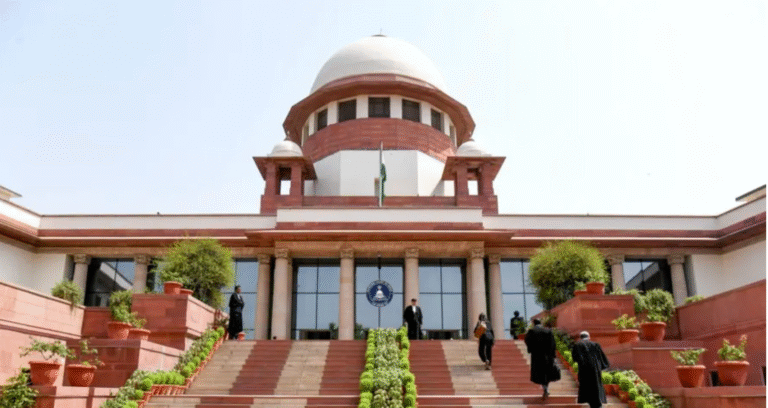
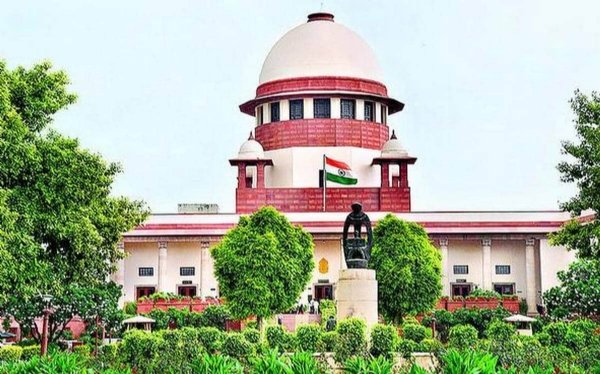
CJI Surya Kant’s Written Reply to a Young Junior Advocate Hailed as More Impactful Than Abraham Lincoln’s Historic Letter; Sets a New Benchmark for Judicial Accountability
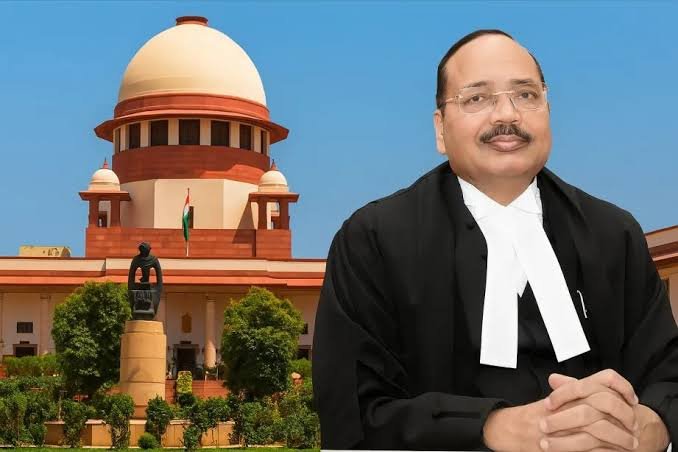
A judicial message that may shape generations — CJI Surya Kant’s response to a young lawyer is being widely welcomed as an unmatched blend of constitutional leadership, humility, authority, and empathy, redefining the moral tone of India’s judiciary.
Legal professionals and citizens across the country have responded with rare unanimity, saying: “CJI Surya Kant has transformed the way the judiciary thinks” and “We have never seen a Chief Justice like this before.”
The President of the Supreme Court Lawyers’ Association, Advocate Ishwarlal Agarwal, and the National President of the Indian Bar Association, Advocate Nilesh Ojha, described the correspondence as deeply inspiring. They noted that the episode recalls the famous letter written by Abraham Lincoln to his son’s teacher. However, they emphasised that Justice Surya Kant’s reply is even more significant, as instead of issuing directions to others, the Chief Justice consciously presented himself as a servant of the nation and the Constitution, reflecting a rare combination of humility, introspection, and institutional accountability.
They observed that this message has the potential not only to positively transform the functioning and ethos of the judiciary, but also to stand as a historic milestone in the evolution of a more sensitive, accountable, and people-centric judicial system—one whose impact will extend to many future generations.
They further urged law universities and law colleges across the country to formally include this historic correspondence as part of their academic study material, so that future advocates and judicial officers may internalize its emphasis on constitutional dignity, humility in the exercise of authority, accountability in public office, and an unwavering commitment to public service.
In addition, they suggested that the letter be laminated and prominently displayed in every bar association and law college across India—not merely as a symbolic gesture, but as a continuing source of ethical guidance. Such public display, they noted, would serve to encourage junior advocates to actively engage in the service of society and the nation, reinforce the values of professional courage and constitutional responsibility, and remind members of the Bar that the practice of law is a public trust.
They further observed that for future members of the judiciary, the letter could function as a moral compass—underscoring the importance of courtesy, politeness, humility, and mutual respect in dealing with junior advocates, while remaining steadfast in their constitutional duties and guided by the larger ethical and constitutional interests of society. According to them, institutionalising these values at the formative stage of legal education and professional practice would contribute significantly to a more humane, accountable, and citizen-centric justice delivery system.
A Rare First in Judicial History
The reply letter issued on behalf of the Chief Justice of India through the Registrar reads as under:
“I am deeply moved by your gracious words of felicitation. With immense gratitude and humility, I stand ready to serve as the Chief Justice of India.
Every decision I render carries the hopes of a nation that seeks fairness, equality, and justice. In fulfilling my duties, I am ever mindful that the true strength of our Constitution lies in its people and in our collective commitment to justice.
Your support and goodwill have been invaluable, and I look forward to your continued guidance as I endeavour to fulfil the duties of this office.
Thank you once again for your thoughtful message.
With warm regards,”
— Kuntal Sharma Pathak
Registrar-cum-PPS to the Hon’ble Chief Justice of India
Office of the Hon’ble Chief Justice of India
Perhaps for the first time in the history of the Indian judiciary, the Chief Justice of India, Hon’ble Justice Surya Kant, not only read with seriousness a heartfelt letter written by a junior advocate containing suggestions, but also accepted its ideas with an open mind and responded with a written reply marked by warmth, humility, and constitutional consciousness. This response is not merely a piece of formal correspondence; it signifies the emergence of a new tradition of dialogue, sensitivity, and shared responsibility between the judiciary and the younger members of the Bar.
In his reply, Hon’ble Chief Justice Surya Kant articulated his thoughts in simple yet deeply moving terms. He acknowledged that every judicial decision he renders carries the weight of the expectations of crores of citizens across the country. He emphasised that the true strength of the Constitution does not reside merely in its text, but in the people themselves and in the collective commitment of institutions and citizens to the cause of justice.
The tone and substance of the letter reflect a rare blend of humility in authority and accountability in leadership, underscoring a judicial philosophy that views the office of the Chief Justice not as a position of command, but as a responsibility of service to the nation, the Constitution, and the ideals of fairness, equality, and justice.
Demonstrating profound humility, CJI Surya Kant described the support and goodwill of junior advocates as invaluable and stated that in discharging his constitutional duties, he also looks forward to continuous guidance, cooperation, and dialogue from junior lawyers.
He stated in unequivocal terms that justice is not merely a paper-based or procedural formality; rather, it is a living embodiment of public trust, constitutional values, and moral responsibility.
The Chief Justice’s message clearly conveys that courts are a heritage of the people of the country, not the private property of one or a few judges. It noted that only through collective effort, open dialogue, transparency, and sensitivity can the judicial system be made more accountable, people-centric, and trustworthy.
Reaction from Junior Advocates and Law Students
The Coordinators of the Indian Bar Association’s Junior Advocates and Law Students Association of India Wing—Advocate Abhishek Mishra, Advocate Vikas Pawar, Ms. Sonal Manchekar, Mr. Aayush Tiwari—and the Women’s Wing Coordinator, Ms. Nicky Poker, stated jointly that they have never witnessed a Chief Justice whose conduct so perfectly combines the highest dignity of office with such profound human sensitivity.
They further observed that, unfortunately, complaints have frequently emerged regarding arrogant, insensitive, intimidating, unjust, and discourteous behaviour by some judges toward junior advocates in certain lower courts across the country. In such an environment, the humble, dignified, and dialogue-oriented conduct of the Hon’ble Chief Justice of India not only reflects his personal values, but also stands as strong evidence of his deep commitment to the nation, the Constitution, and society at large.
They expressed confidence that this example would prompt judges who engage in improper conduct to undertake self-reflection and, at the very least out of moral conscience, improve their behaviour—thereby strengthening the credibility and dignity of the justice system.
They further stated that this letter signals a long-awaited change—one where justice is not expressed merely through orders, but through dialogue, compassion, and participation. The message, they said, is particularly significant for young advocates, as it affirms that their voices matter and that they are not mere spectators, but active participants in judicial transformation.
Beyond Words: Leadership in Action
This letter signals the change that has long been awaited—where justice is reflected not only in orders, but also in dialogue, compassion, and participation. It sends a powerful message to young advocates that their voices matter and that they are not mere spectators, but active participants in judicial transformation.
The most significant aspect of this episode is that the ideas articulated by the Hon’ble Chief Justice in his letter are not confined to words alone, but are clearly reflected in his consistent conduct and judicial decisions. The historic measures taken under his leadership—such as the formulation of the National Judicial Policy, curbing disproportionate privileges of senior advocates in urgent listings, introducing new rules to ensure meaningful hearing opportunities for the poor and junior advocates, and fixing time limits for arguments to guarantee equal opportunity to all parties—collectively demonstrate the sincerity and firmness of the values expressed in his correspondence.
In particular, the National Judicial Policy is expected to ensure uniformity and consistency in decisions across all High Courts and the Supreme Court in cases of a similar nature. This will help eliminate judicial inconsistencies and ensure that justice is delivered equally, without discrimination between rich and poor litigants, senior and junior advocates, or influential and non-influential parties.
With the implementation of this policy, concrete steps will be taken not only nationwide but also across all benches of the Supreme Court to ensure that similar legal principles lead to similar outcomes. As a result, the justice delivery system will become more predictable, transparent, and fair, thereby strengthening public confidence in the judiciary. This initiative is widely viewed as a far-reaching and historic reform aimed at making justice Constitution-centric rather than personality-centric.
This approach clearly demonstrates that the Hon’ble Chief Justice does not merely speak of principles, but actively translates them into practice. It stands in sharp contrast to the tendency, at times observed, where lofty ideals are articulated from public platforms but fail to find reflection in conduct or institutional functioning. In some instances, individuals are even seen delivering lectures on ethics and wisdom after retirement, despite having fallen short of those very values during their tenure.
Against this backdrop, the letter of Hon’ble Chief Justice Justice Surya Kant—combined with his sustained conduct—signals a positive transformation within the Indian judiciary, where humility, equality, sensitivity, and accountability are no longer abstract ideals, but living values. This has not only boosted the morale of young advocates, but has also significantly reinforced the common citizen’s trust in the judiciary.
Many legal observers believe that this episode may signal the advent of a judicial renaissance in the near future—one founded not on rigidity but on sensitivity; not on complexity but on simplicity; and not on distance but on dialogue.
At a time when ordinary citizens increasingly expect courts to use plain language, deliver swift justice, and adopt a humane approach, this step taken by CJI Surya Kant offers reassurance that the judiciary is changing—and in the right direction.
This moment is exceptional in the history of the Indian judiciary, as a written reply by the Chief Justice of India to a junior advocate has transcended the boundaries of formal correspondence and emerged as a living document of empathy, dialogue, and constitutional responsibility. The letter naturally recalls the historic letter written by U.S. President Abraham Lincoln to a teacher—where the emphasis lay not on the height of office, but on the elevation of human values and democratic consciousness.
In response to congratulatory letters and suggestions sent by junior advocates associated with the office of Advocate Nilesh Ojha & Associates and members of the Indian Bar Association, the Hon’ble CJI Justice Surya Kant personally replied to each individual. The language and substance of these replies clearly demonstrate how conscious, sensitive, and committed the holder of the highest judicial office is toward constitutional responsibility, public expectations, and the very soul of justice.
Among all these responses, the reply addressed to Advocate Shivam Gupta stands out as particularly noteworthy. It is remarkable not only for its choice of words, but also for its emotional depth and sensitivity. The letter reflects no display of authority or superiority attached to the office of the Chief Justice; instead, it radiates a deep sense of duty, humility, accountability, and reverence for the Constitution. It serves as a powerful example of how a person occupying the highest constitutional office can communicate with sensitivity and warmth.
In his letter, the junior advocate noted that the legal fraternity holds the Chief Justice’s enlightened, farsighted, and sensitive leadership in the highest regard. Such leadership, he observed, not only strengthens public and professional confidence in the judiciary, but also reaffirms the judiciary’s constitutional role within a democratic framework. On behalf of the entire legal community, he assured full intellectual, professional, and institutional cooperation in giving concrete shape to this national judicial vision.
The written reply issued by the Hon’ble Chief Justice of India, Justice Surya Kant, is therefore being viewed as a rare and inspiring moment in the history of the Indian judiciary. In his response, the Chief Justice not only received the sentiments expressed by the junior advocate with warmth, but also made it clear—through exceptional humility, sensitivity, and constitutional commitment—that every judicial decision he renders is intrinsically connected to the expectations of an entire nation that aspires to justice, equality, and fairness.
The Chief Justice further underscored that the true strength of the Constitution does not lie merely in its provisions, but in the citizens who believe in justice, and in the collective commitment of the judiciary and the legal community that gives life to those principles. Describing the junior advocate’s support and goodwill as invaluable, he expressed his expectation of continued guidance and cooperation in the faithful discharge of his duties.
According to legal experts, this response is far more than an act of formal courtesy; it is a compelling example of dialogue, trust, and shared constitutional responsibility between the judiciary and young advocates. The message makes it clear that judicial leadership is not confined to issuing orders, but is equally shaped by the values of empathy, humility, and participation.
It is particularly noteworthy that a letter written by a junior advocate was read with seriousness, deliberated upon thoughtfully, and answered personally. This recalls a tradition of judicial leadership in which the stature of ideas is valued above the stature of office. Several legal experts have compared this exchange to the historic letter written by U.S. President Abraham Lincoln to a teacher—a letter that reflected not the assertion of power, but the primacy of humanity and democratic conscience.
The legal fraternity views this entire correspondence as a positive and encouraging signal—that the voices of young advocates are being heard, their ideas are being accorded due importance, and that judicial reform will advance not merely through policies, but through dialogue and meaningful participation. This exchange is widely regarded as one that will, in the coming years, provide new direction to judicial culture, legal education, and the role of young advocates within the justice delivery system.
Ojha School of Thought Gains Attention in Legal Circles
Promoting a culture where advocates prioritise “what is right,” not “who is right”
Advocate Shivam Gupta recently came into public focus when, along with sixteen other advocates, he filed a writ petition before the Bombay High Court challenging a judgment delivered by a five-judge bench. The petition alleged that the impugned decision resulted in a violation of their fundamental and constitutional rights, and sought compensation of ₹50 lakh from the government.
This clearly demonstrates that these advocates, even at an early stage of their professional careers, are working with a deep understanding of legal provisions, the courage to demand justice without fear, and a strong commitment to reforming the judicial system.
Advocate Nilesh Ojha has consistently and principledly emphasised the need for transparency, accountability, and adherence to constitutional discipline within the judiciary. The central tenet of his thinking has been that the credibility of the judiciary is not built merely on final judgments, but on the fairness, equality, and integrity of the decision-making process, and on respect for citizens’ fundamental rights. His clear and fearless position has been that justice must not be assessed on the basis of who the litigant is, but on the basis of what is right.
The entire movement led by Advocate Nilesh Ojha has been founded on the principle that every individual must receive equal justice before the courts—whether represented by a senior advocate or argued personally by a junior advocate. He has consistently questioned a system in which seniority, position, or influence is often accorded undue weight, while sound and well-founded legal arguments advanced by junior advocates are sometimes overlooked.
“Don’t see who is right; see what is right.”
He has also been unequivocal in asserting that the law cannot operate differently for the rich and influential and for the poor or ordinary citizens. If a person receives expedited hearings, special protection, or preferential treatment solely due to economic or political status, while an ordinary citizen is forced to wait for years for justice, such a system stands in direct opposition to the spirit of the Constitution. Advocate Ojha has consistently maintained that justice must not only be done, but must also be seen to be done—and that this is possible only when all parties are afforded equal opportunity, equal respect, and equal protection.
Inspired by these values and principles, this group of young advocates, together with the Indian Bar Association and several affiliated organisations, continues to work actively and consistently. These advocates are not only engaged in rigorous study of legal provisions, constitutional principles, and judicial precedents, but are also demonstrating the courage to present them before courts with clarity and fearlessness. For more than two decades, this collective has remained committed to supporting and protecting honest and conscientious judges, while opposing corrupt and unjust conduct and pursuing lawful action against such wrongdoing.
Their efforts send a clear message: demanding justice is not a crime, but a fundamental right guaranteed by the Constitution—and where there is deviation within the system, pointing it out is a moral duty of the legal community.
This group proceeds with the firm belief that the true strength of the judiciary does not lie in suppressing criticism, but in honest self-reflection, transparency, and equal treatment. Carrying forward the intellectual and ethical legacy of Advocate Nilesh Ojha, these young advocates are working with dedication to secure judicial reform, equal justice, and the protection of constitutional values.
At the core of this ideological, ethical, and struggle-driven approach lies Advocate Nilesh Ojha’s vision—one that does not confine justice to courtroom procedure alone, but connects it with public welfare, social reform, and constitutional responsibility. His principled, people-centric, broad-based, Constitution-focused, and fearless philosophy has instilled in this young group of advocates the understanding that the purpose of advocacy is not merely professional success, but also the courage to expose systemic flaws and work toward their correction.
Advocate Ojha has consistently stressed that judicial credibility is founded not merely on outcomes, but on the fairness, equality, transparency, and respect for fundamen